Turkish Salmon Exports Grow 17-Fold in 5 Years

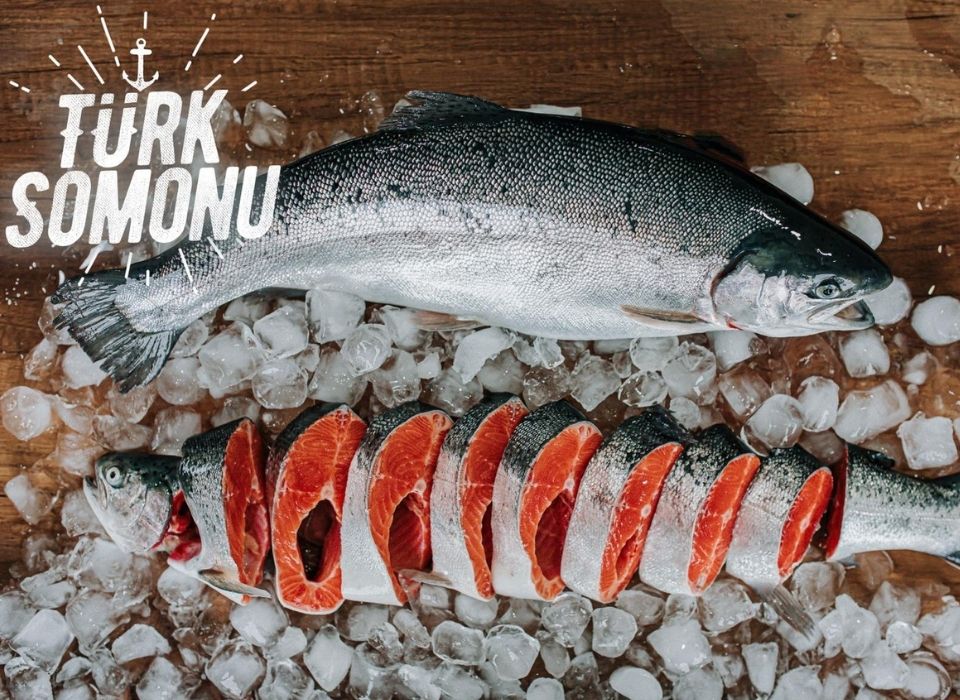
While the Turkish fisheries and aquaculture sector surpassed the $2 billion export threshold for the first time in 2024, Turkish salmon wrote a major success story by increasing its exports 17-fold over the past 5 years.
Turkey's aquaculture sector surpassed the USD 2 billion export threshold for the first time in 2024, while Turkish salmon achieved a major success story by increasing exports 17-fold over the past five years.
Turkish salmon production stood at 5,000 tonnes a decade ago and has now reached 100,000 tonnes. If Turkish salmon maintains its current production and export growth rate, it is positioned to overtake sea bass and sea bream in the coming years, emerging as a leader in exports.
According to data from the Aegean Exporters Associations, Turkey's Turkish salmon exports were USD 29 million in 2019, and by doubling annually thereafter, reached USD 498 million by the end of 2024.
The Russian Federation maintained clear leadership in Turkish salmon exports with USD 356 million, while Germany received USD 36 million and Vietnam USD 26 million in Turkish salmon shipments.
Turkish salmon exports rose 31% in 2024
Sinan Kızıltan, Chairman of the Sector Board of Turkey's Aquaculture and Animal Products Exporters Associations, stated that significant progress has been made in Turkish salmon production and exports through joint work between the aquaculture sector and universities, with exports reaching USD 498 million from USD 349 million in 2024, a 31% increase, and Turkish salmon exports showing a 17-fold increase over the past five years.
Pointing to the growing value of healthy nutrition worldwide, Kızıltan said, "Factors such as Turkish salmon's richness in omega-3 fatty acids and its value as a protein source are increasing interest in Turkish salmon. The water conditions and climate in our Black Sea region are ideal for salmon farming. Climate characteristics in the Black Sea support production increases. The development of technologies used in salmon farming and the establishment of modern facilities are among the factors that increase production efficiency."
Kızıltan, noting that the number of Turkish salmon export companies in Turkey has exceeded 60, continued as follows:
"Turkey has achieved major success in aquaculture exports. Exports, which stood at only USD 59 million in the 2000s, surpassed USD 2 billion 19 million by the end of 2024, a 34-fold increase. Our target as a sector is to reach USD 2.5 billion by 2027."
Emphasizing that Turkey's annual aquaculture production exceeded 1 million tonnes according to 2023 data, Kızıltan stressed that significant progress has been made in the aquaculture sector through modern facility investments. Kızıltan concluded, "In Turkey, 556,000 tonnes of aquaculture products are obtained through farming, which accounts for 55% of total production. Norway's aquaculture sector generates USD 15 billion in annual exports. As Turkey, we can also reach those levels."
Aegean Region leads in aquaculture exports
The Aegean Region maintained its leadership in aquaculture exports. The Aegean Region's aquaculture exports rose 15% to USD 1 billion 292 million from USD 1 billion 127 million. The Aegean Region alone accounted for 64% of Turkey's aquaculture exports.
Sea bass maintained its leadership in aquaculture exports with USD 570 million. Sea bass exports showed a 10% increase compared to 2023. The top three countries in sea bass exports were the United Kingdom with USD 126 million, Italy with USD 85 million, and the Netherlands with USD 84 million.
Sea bream, the second most exported fish species in the aquaculture sector, increased exports by 22%, rising from USD 417 million to USD 508 million. Italy led in sea bream exports with USD 100 million, followed by Greece with USD 75 million and the Netherlands with USD 72 million.
Tuna exports surged 153% in 2024, rising from USD 51 million to USD 129 million.
The majority of our tuna exports, USD 99 million, went to Japan, while South Korea requested USD 29 million in tuna.
Trout exports reached USD 117 million, while rocky sea bass exports generated USD 25.5 million in foreign currency. Other aquaculture exports rose 16% to USD 210 million from USD 181 million. Germany led with USD 52 million in trout demand, followed by Russia with USD 18 million and the Netherlands with USD 9.5 million.
Gallery