Çimsa to Meet 40% of Eskişehir Plant's Energy Needs from Its Own Resources

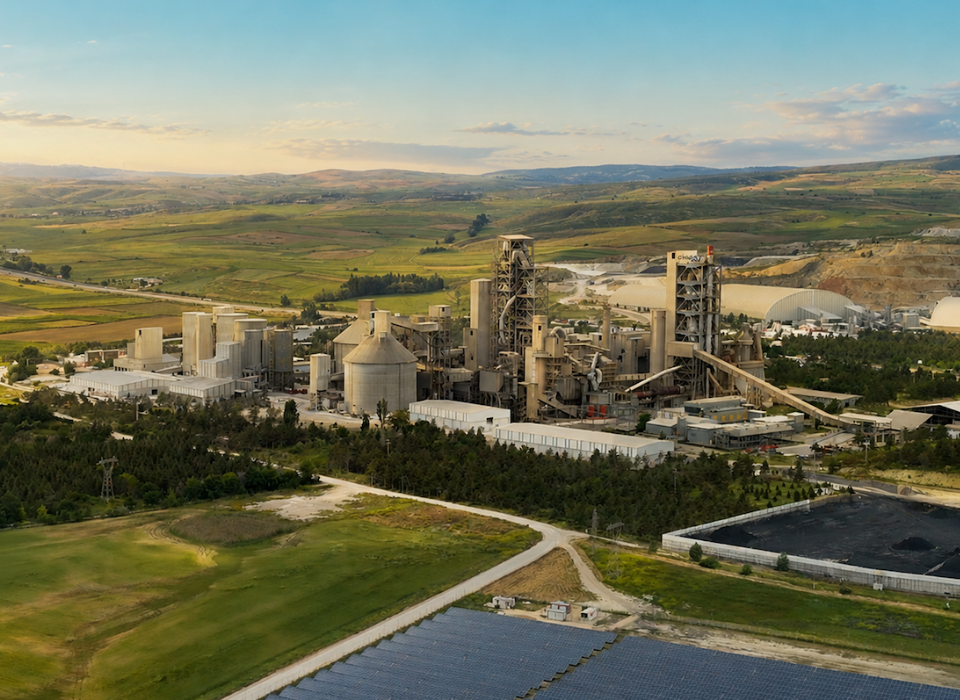
Çimsa has added another investment to its sustainability and energy efficiency portfolio. A Waste Heat Recovery (WHR) plant with an installed capacity of 5.5 MW, built at the Eskişehir Factory in cooperation with Enerjisa Enerji's İşimin Enerjisi brand, has been commissioned. Combined with the 14.2 MWp DC Solar Power Plant (SPP), which became operational in March 2025, the factory will be able to meet approximately 40% of its annual electricity needs from its own resources.
Çimsa has added another investment to its sustainability and energy efficiency initiatives. In cooperation with Enerjisa Enerji's İşimin Enerjisi brand, a Waste Heat Recovery (WHR) facility with a 5.5 MW installed capacity, commissioned at the Eskişehir Plant, has been put into operation. When evaluated together with the Solar Power Plant (SPP) with 14.2 MWp DC installed capacity that became operational in March 2025, the plant will be able to meet approximately 40 percent of its annual electricity needs from its own resources.
Çimsa, which stands out in Turkey's cement sector with sustainability-focused investments, has installed a new waste heat recovery facility that will convert waste heat released during production processes into electrical energy, thereby increasing energy efficiency and contributing to the reduction of carbon emissions.
Waste heat will meet 25 percent of the plant's electricity needs
The new-generation waste heat recovery facility, which operates without water consumption, will meet approximately 25 percent of the Eskişehir Plant's electricity needs on its own. Together with the solar power plant commissioned in March 2025, approximately 40 percent of the facility's total electricity needs will be supplied from renewable and recovered energy sources.
The investment aims to position the Eskişehir Plant as one of the cement facilities with the highest renewable energy usage rate in Turkey, while also reducing energy costs and contributing to carbon reduction targets under the Science Based Targets initiative (SBTi).
"We must be pioneers in sustainability and technology"
Çimsa Board Chairman Umut Zenar stated that sustainability is at the centre of the company's growth strategy, and emphasized that technology and sustainability play a determining role in the sector's future.
Zenar said, "Sustainability is one of the most important elements of today's economic order. Particularly in our sector, differentiation and creating value for stakeholders comes through being pioneers in sustainability and technology. What matters is not only to produce, but to do so with a responsible approach."

Noting that each of the company's production facilities has a different area of expertise, Zenar recalled that the Mersin Plant is the only facility in the world capable of producing grey cement, white cement and calcium aluminate cement (CAC) in the same location, and that work is underway at the Buñol Plant in Spain to increase the alternative fuel usage rate with hydrogen technology.
Zenar stated that Mannok, operating in Ireland, plays an important role in the group's sustainable growth strategy with the production of cement, building materials, insulation products and recycled plastic packaging, and said that the Eskişehir Plant is also one of the important links in this transformation with its renewable energy investments.
Enerjisa Enerji: Collaborations are of critical importance in the industry's energy transformation
Enerjisa Enerji CEO Murat Pınar stated that the energy transformation in industry will accelerate through strong collaborations, and emphasized that the joint evaluation of energy efficiency, renewable energy and digital technologies is of critical importance in terms of competitive strength.
Pınar noted that the project implemented with Çimsa serves as an example of sustainability targets being supported by concrete investments, stating, "With our İşimin Enerjisi brand, we provide end-to-end solutions that enable our customers to transform from not only consuming energy, but also managing and producing energy more efficiently. By bringing waste heat back into the economy, we both increase resource efficiency and contribute to reducing carbon emissions. We will continue to accelerate Turkey's energy transformation through collaborations we have developed in different sectors."

Gallery