New Perspective on Self-Care Policies in Turkey

At the promotional meeting titled "Self-Care and Public Health in Turkey," the Consumer Health Products Association (TÜKSA) addressed the strengthening of public health, improving health literacy, and expanding the self-care approach from a multi-stakeholder perspective. At the meeting, attended by representatives of public institutions, the sector, academia and international organizations, the contribution of consumer health products to public health and the importance of the regulatory framework came to the fore.
The Consumer Health Products Association (TÜKSA) addressed self-care and public health in Turkey at a promotional meeting, examining the strengthening of public health, the improvement of health literacy, and the expansion of self-care approaches from a multi-stakeholder perspective. At the meeting, which brought together representatives from government, industry, academia, and international organizations, the contribution of consumer health products to public health and the importance of the regulatory framework came to the fore.
The meeting opened with remarks from Prof. Dr. Ahmet Ayar, Head of the Turkish Medicines and Medical Devices Agency; Avni Dilber, Director General of Consumer Protection and Market Surveillance at the Ministry of Commerce; and Av. Süleyman Kara, Chairman of the Board of TÜKSA.
Science-Based and Safety-Focused Regulatory Approach
Prof. Dr. Ahmet Ayar stated that regulatory processes in the consumer health field are conducted within a framework of scientific criteria and risk-based inspection practices, emphasizing that the institution's core responsibility is to ensure that products placed on the market are safe, high-quality, and effective. Noting that manufacturing processes and facility standards are carefully evaluated both before and after market entry, Ayar underlined that compliance with international standards and continuous surveillance mechanisms form the foundation of consumer safety. Stating that trust in the health sector is built not only on product quality but also on transparency, scientific evidence, and strong inspection culture, Ayar expressed that sustainable production practices should be an integral part of the sector. He noted that improving health literacy would both raise individual awareness levels and reduce the burden on the health system.
Consumer Health: Balance and Protection Emphasis
Avni Dilber drew attention to the fact that digital media now accounts for approximately 75 percent of promotional activities for health-related products, noting that this transformation requires greater responsibility. Emphasizing that advertisements must be accurate, honest, and substantiated, Dilber stated that protecting a market structure that does not mislead consumers and respects fair competition is of critical importance. Pointing out that the language used for non-prescription (OTC) products must be evaluated carefully within the regulatory framework, Dilber noted that observance of legal limits in health claim communications is crucial both for the healthy development of the sector and for the protection of public health.
Self-Care Transformation in Global Health Policy
Greg Perry, Director General of the Global Self Care Federation, stated that self-care has become a strategic necessity for the sustainability of health systems worldwide. Referring to the World Health Organization definition, Perry expressed that self-care is an approach that strengthens the capacity of individuals and communities to improve and manage their health. Perry noted that increased access to evidence-based non-prescription products reduces the burden on primary health services, and that heightened health awareness following COVID-19 presents an important opportunity for this transformation.
Demographic Change and the Strategic Role of Health Literacy
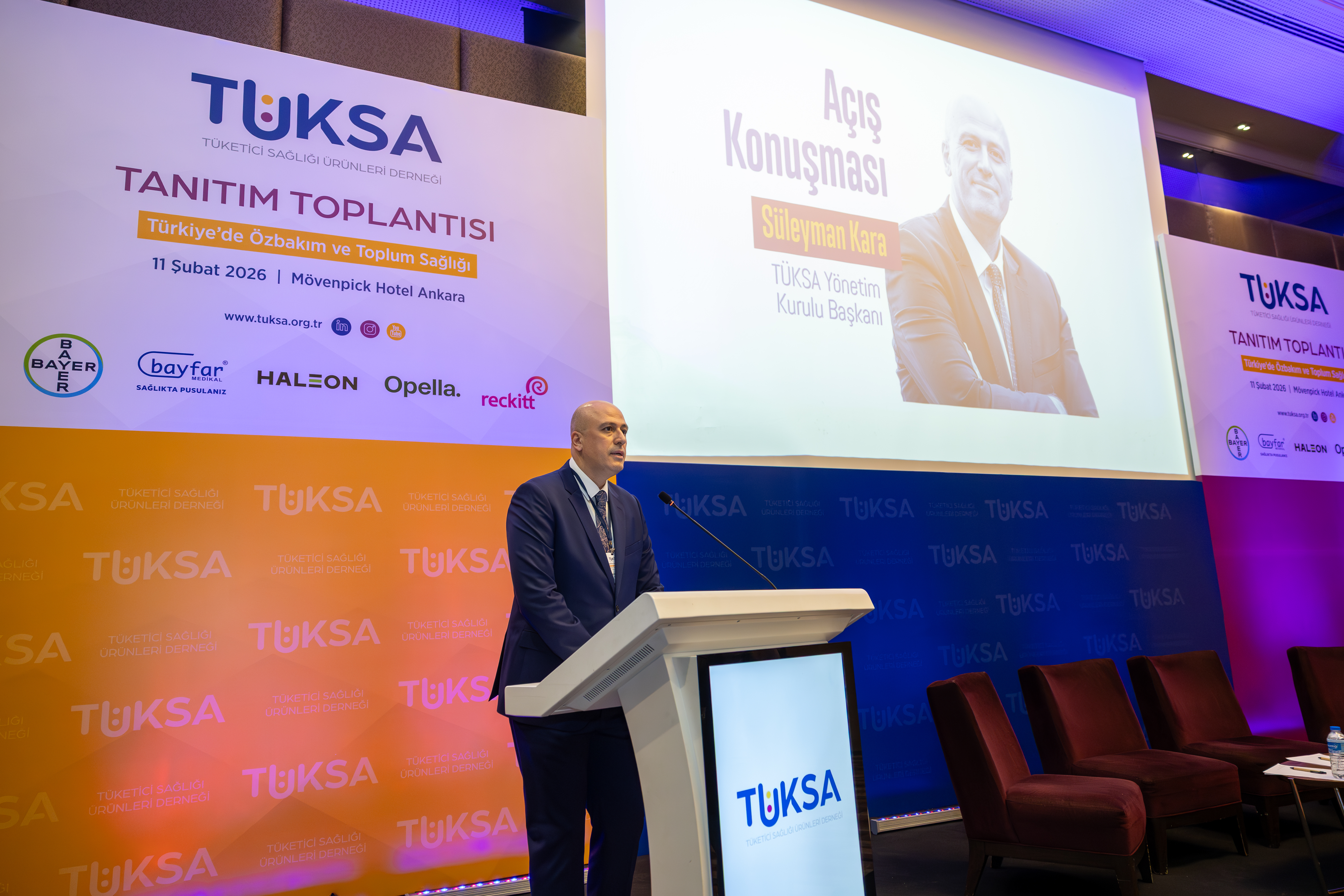
Süleyman Kara, Chairman of the Board of TÜKSA, stated that Turkey's demographic transition process requires individuals to take a more informed and active role in their health processes. Expressing that an aging population and increasing chronic risks make self-care culture more critical, Kara cited a 2025 study covering 150 countries showing that self-care practices have a global savings potential of USD 120 billion. Kara noted that strengthening health literacy would contribute both to individuals' informed decision-making processes and to more efficient use of health resources, stating that TÜKSA will continue to take responsibility in this transformation process.
Multi-Dimensional Assessment in Panels
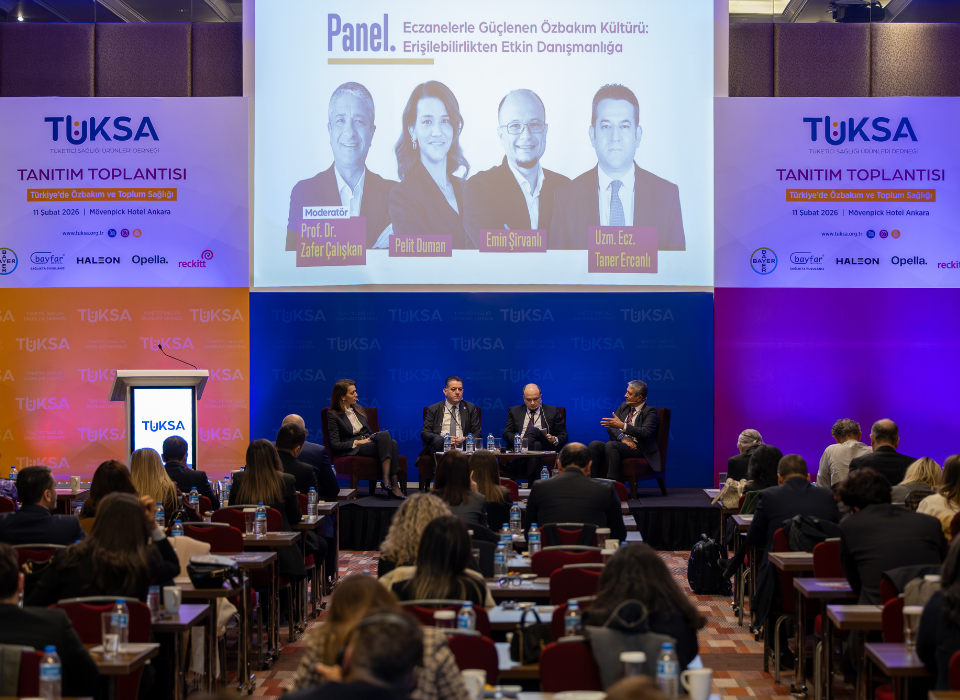
Within the scope of the meeting, panels addressed topics including the advisory role of pharmacies, the value chain in consumer health, the importance of self-care in active aging, and the strengthening of health communication. Assessments were also made regarding the effects of self-care on the social security system, its place in preventive health models, and the global OTC regulatory framework. In sessions conducted with contributions from academia, government, industry, and civil society representatives, it was emphasized that self-care approaches play a strategic role in building more resilient and sustainable health systems both in Turkey and globally.
Gallery