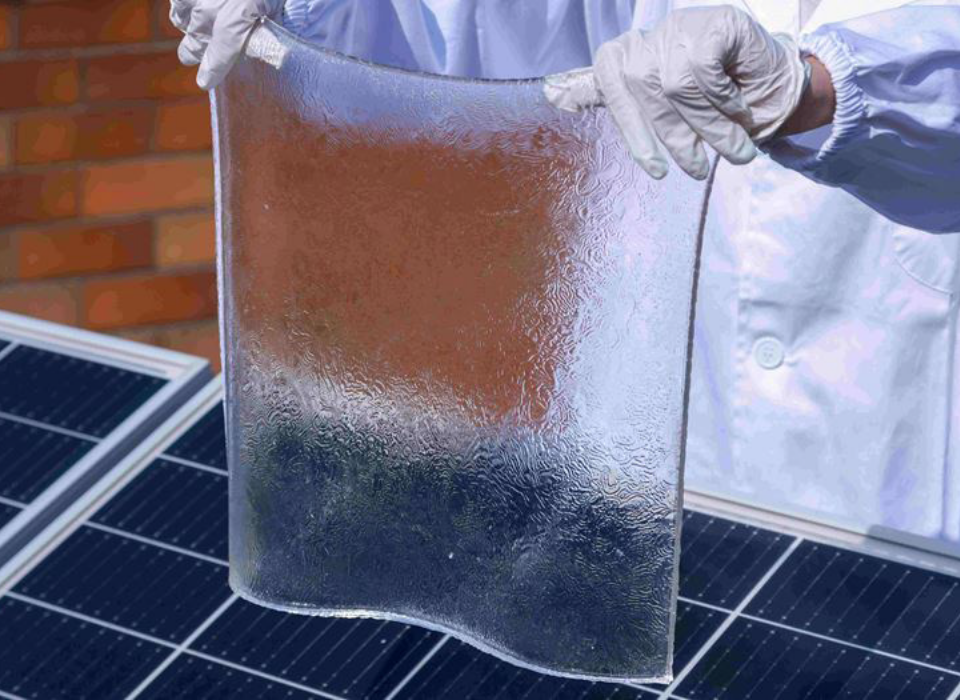
PolyU Researchers Develop Hydrogel Coating for Solar Panels
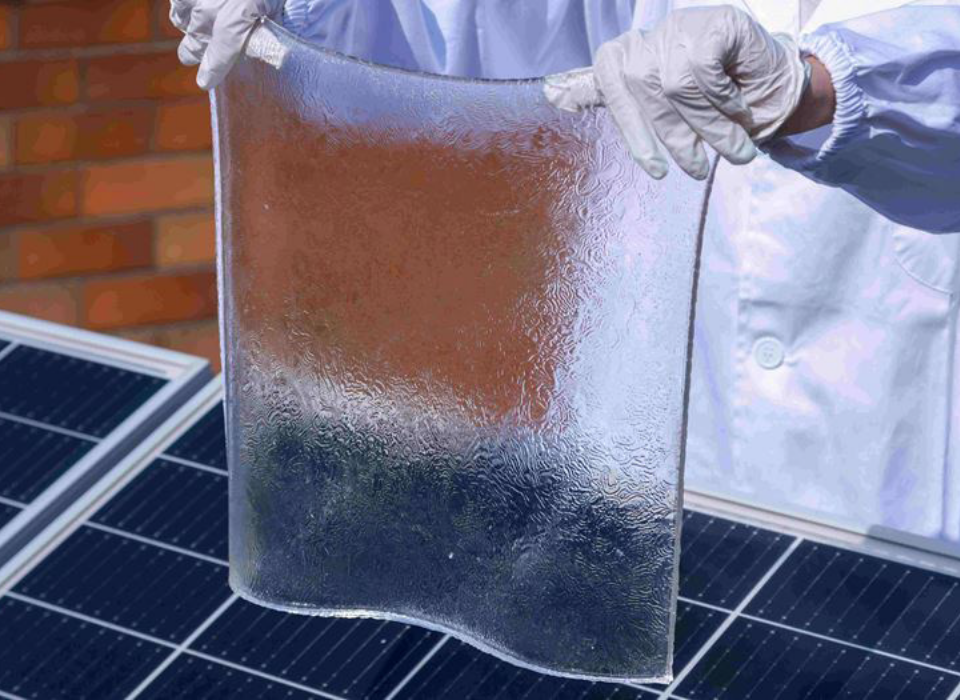
A research team at Hong Kong Polytechnic University (PolyU) has developed a simple and cost-effective hydrogel coating that improves heat distribution for the effective cooling of "hot spots" on solar panels, while also increasing energy generation efficiency. This innovation supports Hong Kong's goal of achieving urban carbon neutrality. Hot spots, usually caused by partial shading, have long been seen as one of the fundamental issues reducing the energy generation efficiency of solar panels and adversely affecting the stability of entire power supply systems over time. The technology developed by PolyU offers an effective and durable solution to this significant industry problem.
A research team at Hong Kong Polytechnic University’s (PolyU) has developed a simple and cost-effective hydrogel coating that improves heat distribution for the effective cooling of “hot spots” on solar panels, while also increasing energy generation efficiency. This innovation supports Hong Kong’s goal of achieving urban carbon neutrality. Hot spots, usually caused by partial shading, have long been seen as one of the fundamental issues reducing the energy generation efficiency of solar panels and adversely affecting the stability of entire power supply systems over time. The technology developed by PolyU offers an effective and durable solution to this significant industry problem.
The innovative hydrogel cooling technology was developed by the PolyU team led by Chair Professor of Energy and Buildings Prof. YAN Jinyue Jerry, with contributions from Dr. LIU Junwei, Research Assistant Professor in the Department of Building Environment and Energy Engineering. The team’s research showed that after applying the hydrogel coating to solar panels, hot spot temperatures could be reduced by up to 16°C and power output could be increased by up to 13%. When applied to “rooftop and building-integrated photovoltaic (BIPV) systems,” the hydrogel coating is expected to reduce nearly half of the power losses caused by hot spots, thereby significantly enhancing the long-term stability and efficiency of solar photovoltaic systems in building electricity supplies.
Prof. Yan said, “Our hydrogel cooling technology effectively resolves hot spot issues in solar panels without requiring any changes to existing circuit designs. Being cost-effective and user-friendly makes it suitable for use in various urban environments. Based on our assessments using Hong Kong and Singapore as examples, our team projects potential increases in annual energy generation of 6.5% and 7.0% respectively. The estimated payback periods are quite short, at just 4.5 years and 3.2 years. On a global scale, this innovation has the potential to offset approximately 50% of the energy generation losses caused by hot spots in BIPV systems, demonstrating that it will make significant contributions to the advancement of solar energy technology.”
The impact of hot spots on solar photovoltaic systems stands out as an issue that requires careful attention. This is because these points not only reduce energy generation efficiency due to high operating temperatures, but can also pose potential fire risks in severe cases. According to existing research examining 3.3 million photovoltaic panels, thermal defects were detected in 36.5% of the panels, and the average temperature increase in defective modules was found to be above 21°C. This situation accelerates the aging and deterioration processes of solar panels. The hydrogel coating developed by PolyU not only provides superior cooling performance but also exhibits high durability suitable for long-term outdoor use.

The findings of the PolyU research team showed that applying this hydrogel coating to solar panels could reduce hot spot temperatures by up to 16°C and increase power output by up to 13%.
Gallery