Deloitte Research: One-Third of Employees Experienced 15 Major Changes in the Last Year

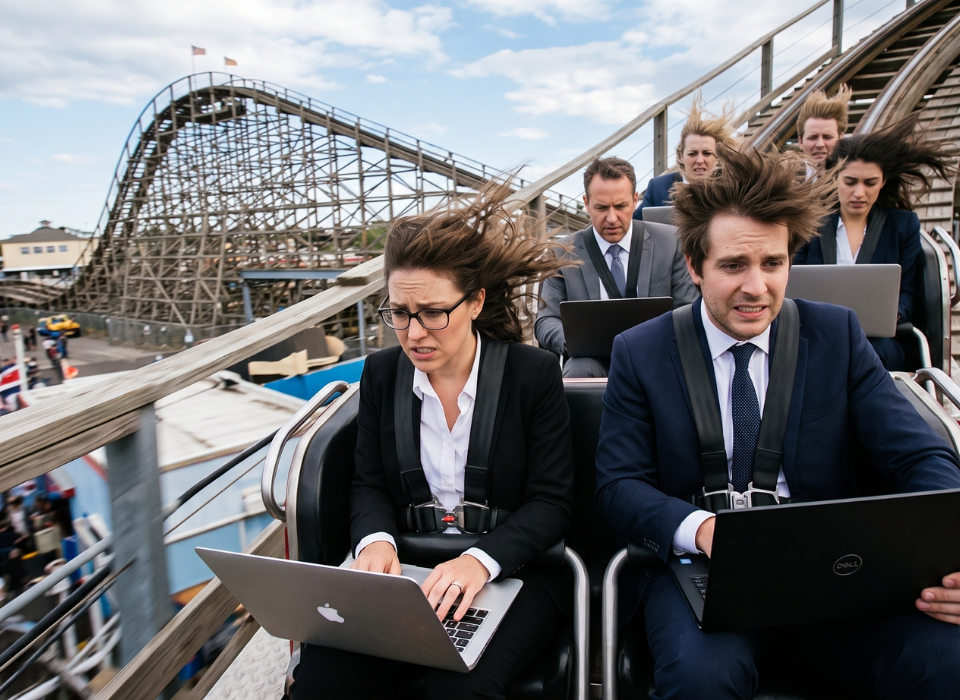
While technological transformation, new business models and changing competency needs in working life require employees to adapt more frequently, the increasing pace of change is making "change exhaustion" one of the important topics on the HR agenda. According to Deloitte's 2026 Global Human Capital Trends research, one-third of employees experienced 15 major changes within the last year.
While technological transformation, new business models and changing competency needs in working life require employees to adapt more frequently, the increasing pace of change is making “change exhaustion” one of the important topics on the HR agenda. According to Deloitte’s 2026 Global Human Capital Trends research, one-third of employees experienced 15 major changes within the last year.
The acceleration of transformation in the business world also brings about organizations reassessing their change management approaches. Employees having to adapt to consecutive strategy, business model, customer expectation and technology-focused transformations requires consideration not only of the operational dimension of change but also of its impact on the employee experience.
According to Deloitte’s research, the constant pace of change causes a decline in wellbeing levels in 68% of employees, an increase in workload in 60%, and a feeling of falling behind in working life in 58%.
This data indicates that employees’ capacity to adapt to change is becoming an increasingly strategic issue for organizations.
Change exhaustion comes to the forefront on the HR agenda
While technological transformation, the spread of artificial intelligence applications, new working models and changing workforce needs are accelerating companies’ transformation processes, they also require employees to continuously adapt to new conditions.
Successive transformations occurring one after another can negatively affect employees’ motivation and adaptation capacity in the face of change. This situation is making the concept of “change exhaustion” a more important topic in the field of human resources and employee experience.
Pointing out that change can no longer be handled as one-off transformation projects, Deloitte is bringing to the agenda a transition to a more adaptive working culture defined as “changefulness.”
In this approach, the aim stands out as organizations continuously supporting employees’ capacity to adapt to change, rather than expecting employees to re-adapt with each new change.
85% of leaders see adaptation to change as critical
The research also reveals a significant gap between organizations’ approach to change and their capacity to support employee adaptation.
85% of leaders see it as critical for the organization and the workforce to be able to adapt to today’s pace of change. However, only 7% of leaders believe their organizations are in a leading position when it comes to supporting employees’ continuous development and adaptation.
This picture shows that employee experience, adaptation and wellbeing issues need to be moved to a more central position in change management.
As change transforms into a permanent part of working life, it becomes important for employees’ experience in the face of change to be treated not only during transformation periods but as a continuous component of the organizational culture.
“Change is now part of the daily work experience”
Meditopia Co-Founder and CEO Fatih Mustafa Çelebi stated that change in working life has ceased to be a periodic process, and expressed that organizations need to focus more on employees’ experience in the face of change.
Çelebi said, “Change in working life is no longer a periodic process but is becoming part of the daily work experience. Expecting employees to continuously adapt to new conditions is not a sufficient approach on its own in working environments where the pace of change has increased. At this point, it becomes important for organizations to understand employees’ experience in the face of change and to create a working environment where they feel safe, supported and open to development.”

Stating that the wellbeing approach needs to be positioned at the center of the change process, Çelebi said that Meditopia has shaped its work in a way that will support employees’ wellbeing in the changing world of work and contribute to organizations understanding the employee experience more closely.
Çelebi used the following words: “For change to be sustainable, it depends not only on organizations’ transformation capacity but also on how employees position themselves within this transformation.”

Regularly monitoring employee experience is important
With the increasing pace of change in working life, it becomes important for HR teams not only to manage change but also to strengthen employees’ capacity to adapt to change.
To prevent change exhaustion, regularly monitoring employee experience, measuring the impacts of transformations on employees, and developing organizational culture in a way that supports adaptation stand out among the prominent topics.
This approach aims to remove change from being merely a periodic process that needs to be managed, and instead make it part of a sustainable working culture that supports employees’ development, adaptation and wellbeing.
Gallery