Food Videos on Social Media Are Changing Eating Habits: Uncontrolled Eating Tendency on the Rise

A study conducted by İstanbul Bilgi University students revealed that as the time spent watching food-related videos on social media increases, the tendency toward uncontrolled and emotional eating also rises. According to the research, individuals who spend more time watching food videos also report lower body satisfaction.
Research conducted by Istanbul Bilgi University students found that as time spent watching food-related videos on social media increases, uncontrolled and emotional eating tendencies rise. According to the study, individuals who watch food videos for longer periods also experience decreased body satisfaction.
Food recipes, restaurant reviews, tasting and mukbang videos increasingly prevalent on social media go beyond serving as entertainment and information sources, potentially influencing individuals' eating behaviors and body image. Research conducted by Istanbul Bilgi University Department of Nutrition and Dietetics students demonstrated that increased exposure time to food-related video content correlates with rising uncontrolled and emotional eating tendencies.
The research, involving 364 adults from different provinces in Turkey, showed that the quality of consumed content may be more determinative for eating behaviors and body image than the total time spent on social media.
Food recipe videos watched most frequently
Food recipes ranked first among food-related content most frequently followed on social media by research participants. While 37.9 percent of participants stated they most frequently watched food recipe videos, 31.6 percent followed restaurant and food reviews.
Sports and diet content ranked third with 18.7 percent, while the proportion of those most frequently watching mukbang and tasting videos was 11.8 percent.
Risk noted in those watching more than 2 hours daily
One of the most striking findings of the research was the relationship between food video viewing duration and eating behaviors.
According to the findings, as time allocated to food-related video content increased, uncontrolled eating, cognitive restraint, and emotional eating tendencies also rose. Particularly notable was that participants watching 2-4 hours and over 4 hours of food-related video content daily showed higher scores related to eating behaviors.
Conversely, as video viewing time extended, body satisfaction scores gradually decreased. Participants watching food videos for the longest periods had the lowest body satisfaction scores in the research.
Women show higher emotional eating tendencies
Results regarding variables such as gender, age, and body mass index also drew attention.
Female participants showed significantly higher emotional eating scores compared to males. Furthermore, as body mass index increased, body satisfaction decreased.
The research also determined that individuals aged 31 and over tend to maintain nutrition behaviors in a more controlled manner.
TikTok users show higher uncontrolled eating scores
Differences were also observed between social media platforms.
Participants reporting most frequent TikTok use constituted the group with the highest average uncontrolled eating scores in the research. Instagram users stood out as the group with the highest body satisfaction scores.
These findings indicate that the effects of content encountered and usage patterns on social media platforms on eating behaviors and body image require separate evaluation.
"Food content has become a powerful digital stimulus"
Emre Batuhan Kenger, Assistant Professor at Istanbul Bilgi University Department of Nutrition and Dietetics and research advisor, noted that food content on social media goes beyond being merely recipe or entertainment-oriented shares.
Kenger stated that the research particularly demonstrated that as food video viewing time increased, uncontrolled and emotional eating tendencies rose while body satisfaction decreased.
Emphasizing that rather than entirely condemning social media, attention must be paid to what content users are exposed to, for how long, and how, Kenger stated that strengthening media and nutrition literacy in young adults is critically important.

Social media and nutrition literacy gaining importance
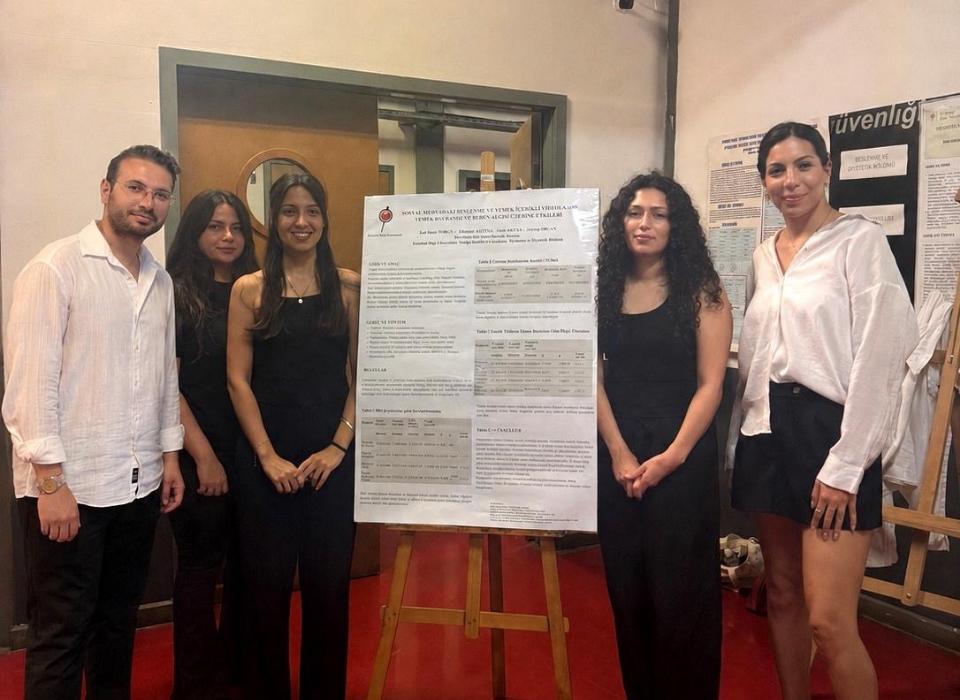
The research conducted by Istanbul Bilgi University Department of Nutrition and Dietetics students Aslı Başak Toprak, Tuğbanur Sarıtaş, İpek Arslan, and Zeynep Özgen draws attention to the relationship between food content on social media and individuals' eating behaviors and body image.
Research findings demonstrate that in social media use, not only the time spent in front of screens but also the quality of consumed content must be considered, while highlighting the importance of developing media and nutrition literacy particularly in young adults.
Gallery