Agricultural R&D Move from ETİ Against Climate Change: First Seed Harvest of Kanatlı Wheat

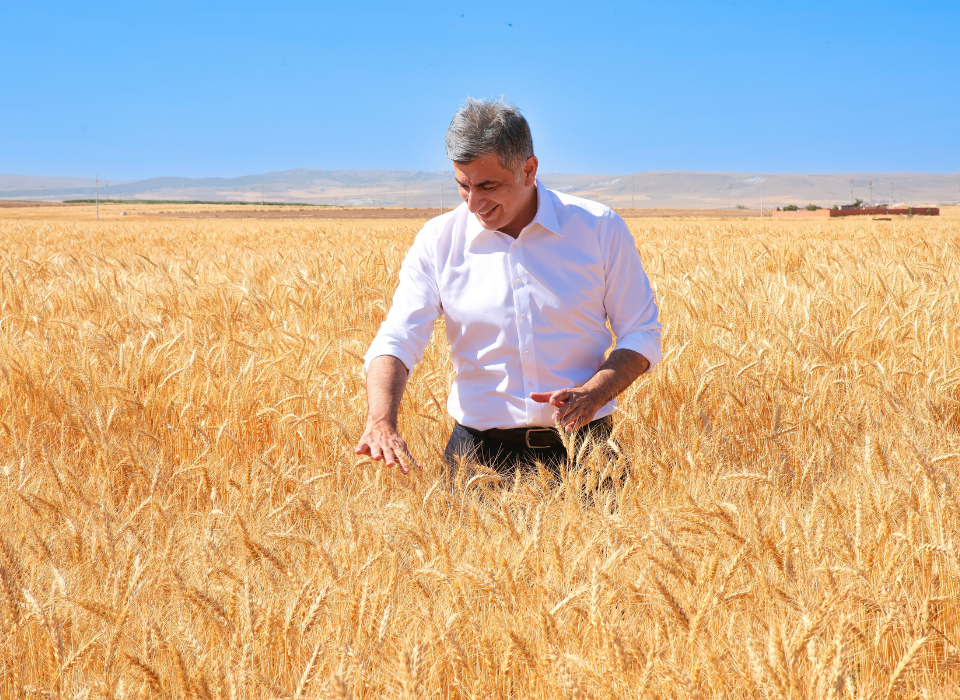
ETİ has carried out the first seed harvest of Kanatlı Wheat, which it developed to counter the effects of climate change on agricultural production. Developed as part of breeding studies initiated in 2004 by the Transitional Zone Agricultural Research Institute, the variety stands out for its resistance to drought conditions, its wide adaptation capability, and its suitability for biscuit wheat production.
ETİ has carried out the first seed harvest of Kanatlı Wheat, which it developed to counter the effects of climate change on agricultural production. Developed as part of breeding studies initiated in 2004 by the Transitional Zone Agricultural Research Institute, the variety stands out for its resistance to drought conditions, its wide adaptation capability, and its suitability for biscuit wheat production.
ETİ, one of the companies operating in Türkiye's food sector, has completed the first seed harvest of Kanatlı Wheat, to whose development it contributed as part of its sustainable agriculture and agricultural R&D efforts.
The development process of Kanatlı Wheat began in 2004 with breeding studies initiated by the Eskişehir Transitional Zone Agricultural Research Institute. The variety, which emerged as a result of work carried out in cooperation with TÜBİTAK and TAGEM, stands out especially for its characteristics aimed at reducing the pressure of changing climate conditions on agricultural production.
Kanatlı Wheat, which stands out for its resistance to arid climate conditions and its wide adaptation capability, is aimed at forming an important alternative in supplying the quality and sustainable wheat raw material needed by the food industry, especially the biscuit sector.
Will form the basis of certified seed production
Kanatlı Wheat, whose production rights were acquired last year, is planned to form the basis of ETİ's certified seed production. With the widespread adoption of the variety, it is aimed to contribute to the development of more resilient agricultural production models against drought risks caused by climate change and to strengthen sustainable raw material supply in biscuit wheat.
ETİ Global CEO Ercan Öz stated that the first seed harvest of Kanatlı Wheat is one of the important outputs of agricultural R&D efforts that have been carried out for many years.
Öz said, "Kanatlı Wheat, which we became involved in 10 years ago as ETİ and whose first harvest we have now carried out, is one of the concrete results of our agricultural sustainability vision. These long-term efforts, which we have been carrying out with the goal of securing the future of our country's agriculture and food industry, have become even more important in the face of the increasing drought risk, especially in recent years. At a time when the vulnerability of traditional agricultural models to climate change is increasing, developing varieties that are more resistant to climate conditions is of critical importance," he said.
Kanatlı Wheat was named after ETİ's founder, the late Firuz Kanatlı, by the Transitional Zone Agricultural Research Institute, in recognition of his support for agricultural production studies.
Contract farming model reaches 350,000 decares
One of the important components of ETİ's sustainable agriculture approach is its contract farming model. The company has expanded the model, which it launched approximately 15 years ago with 11 farmers and an area of 1,800 decares, to a production area of approximately 350,000 decares today.
Under the model, farmers are provided with various in-kind support during the production process, particularly seeds, fertilizer, and plant nutrition products, while also being offered technical consultancy through expert agricultural engineers. A purchase guarantee for products meeting quality criteria and free transportation support from the field are among the other elements of the model.
ETİ Global CEO Ercan Öz stated that sustainable agriculture carries strategic importance not only in environmental terms but also in terms of the food industry's raw material security, and noted that the models developed together with farmers contribute to long-term production continuity.
Agricultural R&D and seed development efforts continue
ETİ continues its agricultural R&D activities through collaborations with universities, scientific organizations, and research institutes, in addition to the expert teams within the company.
Authorized by the Ministry of Agriculture and Forestry as a "Private Sector Agricultural Research Organization," the company carries out efforts aimed at increasing efficiency, quality, and climate resilience in agricultural production through TÜBİTAK-supported projects, joint breeding studies, and private seed development programs.
The Kanatlı Wheat project is considered one of the standout projects within these efforts in terms of developing domestic varieties capable of adapting to changing climate conditions and meeting the food industry's sustainable raw material needs.
With the completion of the first seed harvest, a new stage has begun in the process toward certified seed production and widespread adoption of Kanatlı Wheat, with the aim of the variety contributing to the development of sustainable and climate-resilient agricultural production in Türkiye.
Gallery