Development of Vegetable Oil-Based Defoamer Formulations as an Alternative to Mineral Oil-Based Defoamers

In paint and coating formulations, defoamers play a critical role in controlling unwanted foam that arises during production, filling and application stages. Traditionally, mineral oil-based defoamers have been widely preferred in the industry due to their high effectiveness, broad compatibility ranges and low cost.
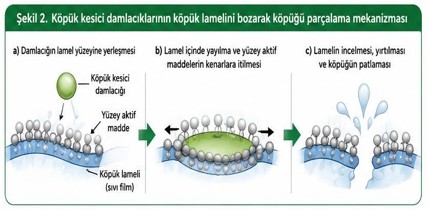
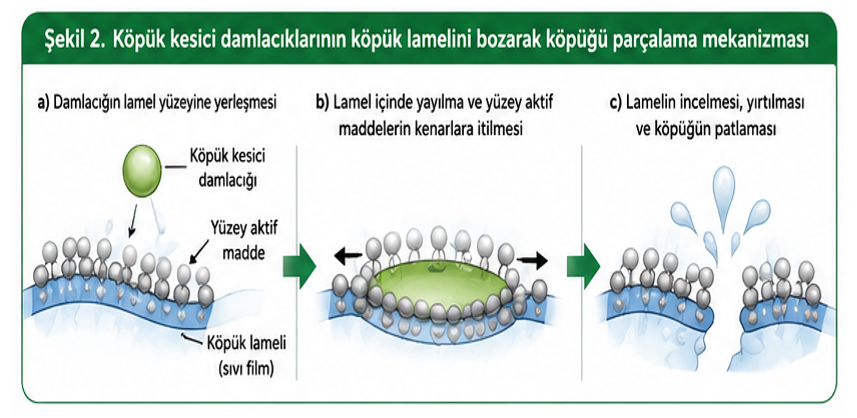
The mechanism of action of defoamers is based on disrupting the structure of the foam lamella, causing it to lose stability and break down. The defoamer droplet first reaches the surface of the foam lamella and penetrates into the lamella. As the defoamer droplet spreads within the lamella, it pushes the surfactants present on the lamella surface toward the edges of the interface. This process disrupts the homogeneous and stable structure of the foam lamella and causes local thinning. As the lamella progressively thins and loses its mechanical integrity, rupture occurs and the air bubble it contains bursts, breaking down the foam structure. Thus, the defoamer not only ensures rapid elimination of existing foam, but also limits the continuity of foam formation by reducing the stability of the foam lamellae.
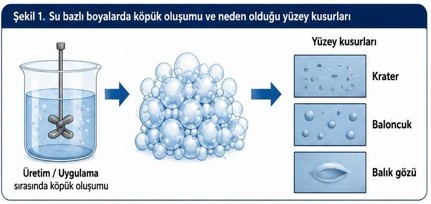
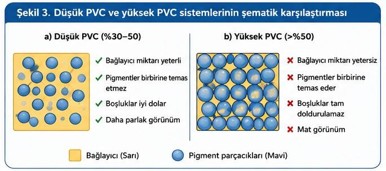
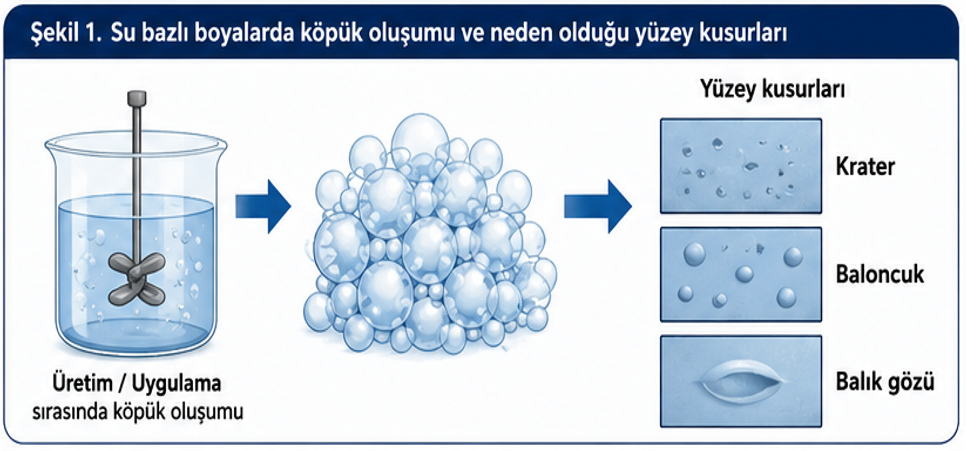
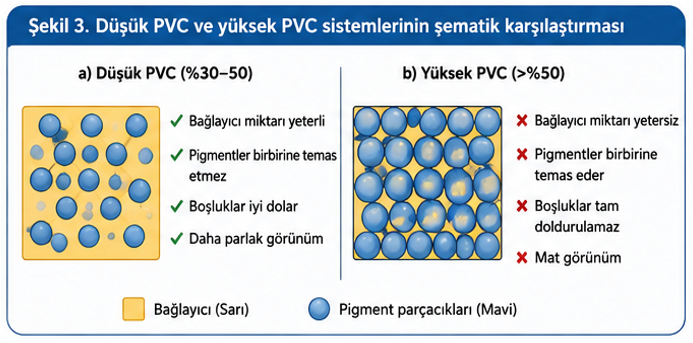
Water-based paint systems are widely used due to their low VOC content and environmentally friendly structures. However, the foaming that occurs during production and application negatively affects paint quality by causing defects such as craters, bubbles and fish eyes on the film surface. Foam formation is related to surfactants, high-shear mixing processes, rheological additives and PVC (Pigment Volume Concentration) values.
Particularly in systems within the 30–50% PVC range, the entrapment of foam within the system necessitates the use of effective defoamers.
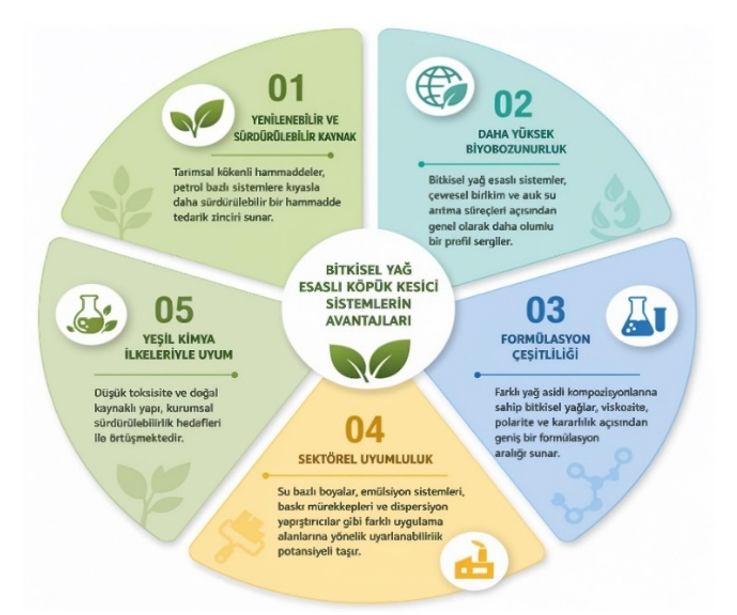
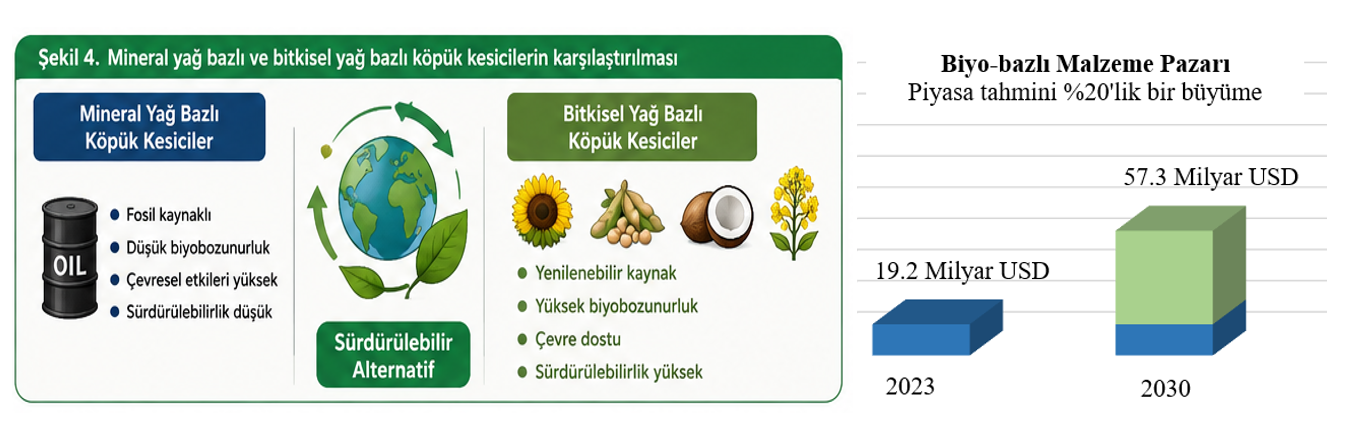
However, the limitations posed by these petroleum-derived raw materials in terms of sustainability, biodegradability and environmental impact are driving the industry to seek alternative solutions. In line with this trend, vegetable oil-based defoamer formulations are attracting increasing attention because they can be obtained from renewable sources and offer a lower environmental footprint.
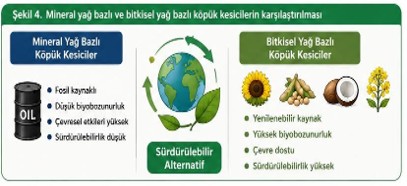
This global shift toward bio-based raw materials has gone beyond being merely an environmental necessity and has become a powerful growth trend shaping raw material markets. These materials, which are obtained from renewable sources, reduce dependence on fossil fuels and are fully aligned with sustainability goals, are now becoming the primary choice in industrial production.
When the economic dimension of the sector is examined, the value of the global bio-based materials market stood at 19.2 billion USD as of 2024. The market is projected to reach a volume of 57.3 billion USD by 2030, achieving a compound annual growth rate (CAGR) of 20%. This comprehensive report, prepared for industry stakeholders, aims to guide your strategic business decisions by providing an in-depth analysis of market trends, growth dynamics and the reflections of current global tariff developments on the market.
Going forward, vegetable oil-based defoamer R&D studies are expected to focus on strategic areas such as the optimization of different vegetable oil blends, integration into bio-based emulsion systems, and the conversion of agricultural waste oils into value-added products.
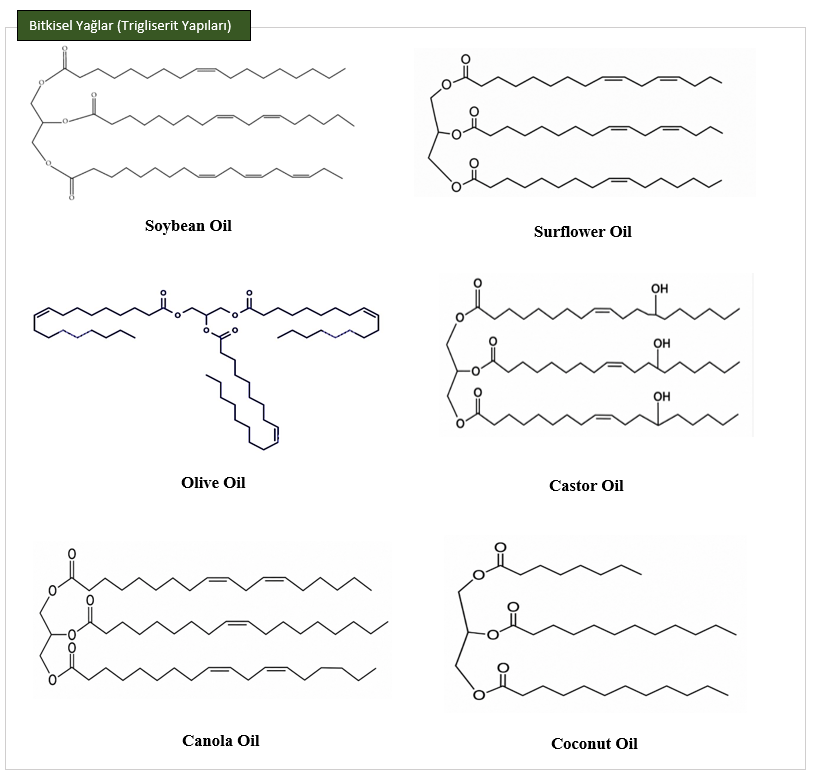
Mineral oils, which are commonly used in conventional defoamers, have begun to be replaced by sustainable alternatives due to environmental concerns. In this study, the performance of defoamer formulations based on sunflower, soybean, castor, olive and canola oils was examined, and the potential of vegetable oils to constitute an environmentally friendly alternative was investigated.
Vegetable Oil Types Evaluated

The Importance of Vegetable Oil-Based Defoamers in the Paint and Coatings Industry
Vegetable oil-based defoamers can enable paint and coating companies to strike a balance between sustainability and performance. Interest in such alternatives is increasing, particularly in areas such as water-based emulsion paints, printing inks, varnish systems and dispersion adhesives. The widespread adoption of sustainable production standards indicates that the market share of plant-based additives may increase over time.
Conclusion
The paint and coatings industry is transitioning from mineral oil-based raw materials to plant-based alternatives for environmental and sustainability reasons. General development studies carried out on various vegetable oils such as canola, soybean, sunflower, olive, castor and coconut oils show that these oils, thanks to their unique fatty acid compositions and physical properties, can provide distinct and complementary contributions to defoamer formulations. At the Reaksiyon Kimya R&D Center, various projects are being carried out to replace mineral oil-based raw materials with bio-based alternatives for environmental and sustainability reasons.
Gallery
Advertisement
Ad Space728 × 90