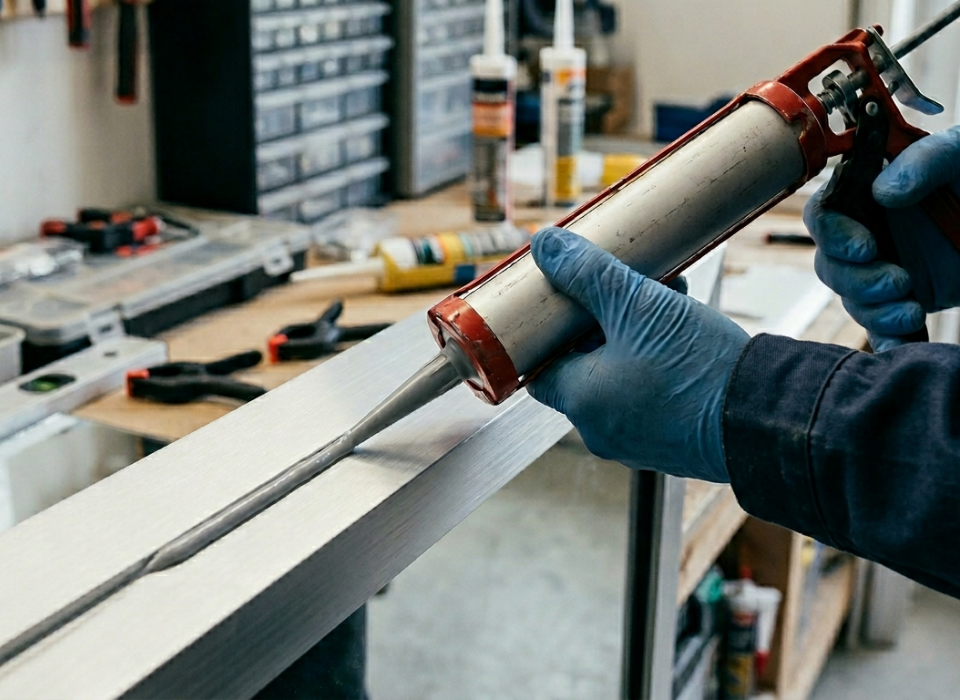
In the world of industrial assembly, few materials offer the versatility, durability and sheer bonding strength that polyurethane adhesives do. From aircraft hangars to the high-speed assembly lines of the automotive industry, PU adhesives have become the "gold standard" for bonding different substrates together in cases where mechanical fasteners fall short or add unnecessary weight.
In the industrial assembly world, few materials offer as much versatility, durability, and sheer bonding strength as polyurethane adhesives. From aerospace hangars to the high-speed assembly lines of the automotive industry, PU adhesives have become the "gold standard" for bonding disparate substrates where mechanical fasteners fall short or add unnecessary weight.
In this article, we examine the chemistry of these high-performance polymers, their performance characteristics, and emerging industrial applications.
The Isocyanate Bond
The strength at the heart of polyurethane lies in the exothermic reaction between two main components: isocyanates and polyols. Unlike many adhesives that rely solely on physical drying or evaporation, PU adhesives create strong, flexible chemical chains through cross-linking.
One-Component (1K) Systems: These use atmospheric moisture to trigger the curing process. They are preferred for ease of application in construction and windshield bonding operations.
Two-Component (2K) Systems: Composed of a resin and hardener, cure speed is independent of moisture and can be accelerated by heat; this makes them ideal for high-volume production.
2. Core Performance Properties: Technical Analysis
While epoxies are often touted for high ultimate tensile strength, their inherent brittleness frequently leads to failure in dynamic environments. Polyurethanes (PUs) fill the gap between rigid structural adhesives and high-performance elastomers.
A. Energy Dissipation and Toughness
The primary mechanical advantage of polyurethanes is their high fracture toughness. Unlike cyanoacrylates, which have high shear strength but very low peel strength, PUs employ a "segmented copolymer" architecture. This structure consists of hard segments in succession with soft segments that provide rigidity and flexibility respectively. When stress is applied, the soft segments deform to dissipate energy and prevent micro-cracks from propagating along the bond line. This makes them the clear choice for high-vibration environments such as rail vehicle assembly and heavy machinery.
Stress Management in Multi-Material Bonding
In modern manufacturing, engineers frequently bond materials with vastly different Coefficients of Thermal Expansion (CTE), such as adhering a composite roof to a steel vehicle body.
Risk: If a rigid adhesive (such as epoxy) is used, the steel will expand faster than the composite when heated, creating enormous internal stresses that lead to delamination.
PU Solution: Polyurethanes exhibit "low modulus" compared to epoxies. This allows the adhesive layer to act like a gasket, flexing and compressing to absorb dimensional changes in the substrates without loss of adhesion.
Glass Transition Temperature (Tg) and Service Range
The performance of a PU adhesive is determined by its Glass Transition Temperature (Tg). Most industrial PUs are designed with a Tg well below room temperature, keeping them in a "rubbery" state during normal operation.
-Low Temperature Performance: Specialized PUs maintain bond integrity in polar or aerospace conditions even at -40°C, avoiding the brittle glassy state (Wicks et al., 2007).
-High Temperature Performance: At the upper limit (above 100°C), hard segments preserve the adhesive's structural "memory," preventing flow or excessive viscosity.
Chemical and Environmental Hydrolysis
Polyurethanes are naturally resistant to non-polar solvents, oils, and fuels; critical for automotive engine bay applications. However, engineers must account for hydrolytic stability. Standard PUs can be susceptible to long-term moisture degradation; but formulations prepared using polyether polyols instead of polyester polyols are specifically engineered to resist "hydrolysis" or breakdown in humid, tropical, or marine environments.
Industrial Applications: Where PU Excels
-Automotive and Transportation: The "lightweight" push in electric vehicles (EVs) has driven demand for PU adhesives. They are used to bond battery frames, roof panels, and composite structures; replacing heavy rivets and welds while providing continuous weather sealing.
-Construction and Infrastructure: In Mass Timber and cross-laminated timber (CLT) applications, PU adhesives form the structural backbone. Their ability to penetrate wood fibers creates a bond often stronger than the wood itself, all without formaldehyde content.
-Aerospace: PUs used in cabin interiors and structural honeycomb panels provide the fire, smoke, and toxicity (FST) compliance required for aviation safety.
Process and Application Considerations
While PU adhesives are powerful, they require careful handling:
-Surface Preparation: Though PUs are "forgiving," surfaces must be degreased. Some low-energy plastics (such as PP or PE) may require plasma or corona treatment.
-Moisture Sensitivity: Uncured isocyanates react aggressively with water. Storage in nitrogen-blanketed containers is typically required to prevent early skinning or "foaming" caused by the byproduct gas.
5. The Future: Sustainability and Bio-Based PUs
The sector is currently shifting toward green polyurethanes. This involves development of polyols derived from castor oil, soy, or recycled PET plastics. Additionally, "Isocyanate-free" polyurethanes (NIPUs) are entering the market to address health and safety concerns related to respiratory sensitivity.
Conclusion
Polyurethane adhesives represent a rare intersection of high-performance engineering and practical versatility. As industries continue to advance toward complex composite materials and demanding environmental standards, the "polyurethane bridge" will remain a vital component in modern manufacturing.
References
Sonnenschein, M. F. (2021). Polyurethanes: Science, Technology, Markets, and Trends. Wiley.
Petrie, E. M. (2007). Handbook of Adhesives and Sealants. McGraw-Hill Education.
Wicks, Z. W., et al. (2007). Organic Coatings: Science and Technology. Wiley-Interscience.
Adhesives & Sealants Council (ASC). Technical Report on Structural Bonding in EV Battery Packs (2024).
Gallery