Pepsico Turkey Continues to Take Steps Toward a More Sustainable Life for the Environment

PepsiCo, one of the world's largest food and beverage companies, continues its work in line with the pep+ strategy, which represents an end-to-end strategic transformation.
PepsiCo, one of the world's largest food and beverage companies, continues its work in line with the pep+ strategy, which represents an end-to-end strategic transformation.
PepsiCo Turkey, which supports sustainable living under three headings—positive value chain, positive agriculture and positive choices—draws attention with innovative projects designed to create positive impact for the environment and serve as examples worldwide. With its "Biomethane Facility" project, PepsiCo Turkey inspires the world through its efforts to reduce carbon emissions, while with its "One Drop One World" project, it takes important steps toward becoming a water-positive company by returning the water it uses in its factories back to the basin where it is located.
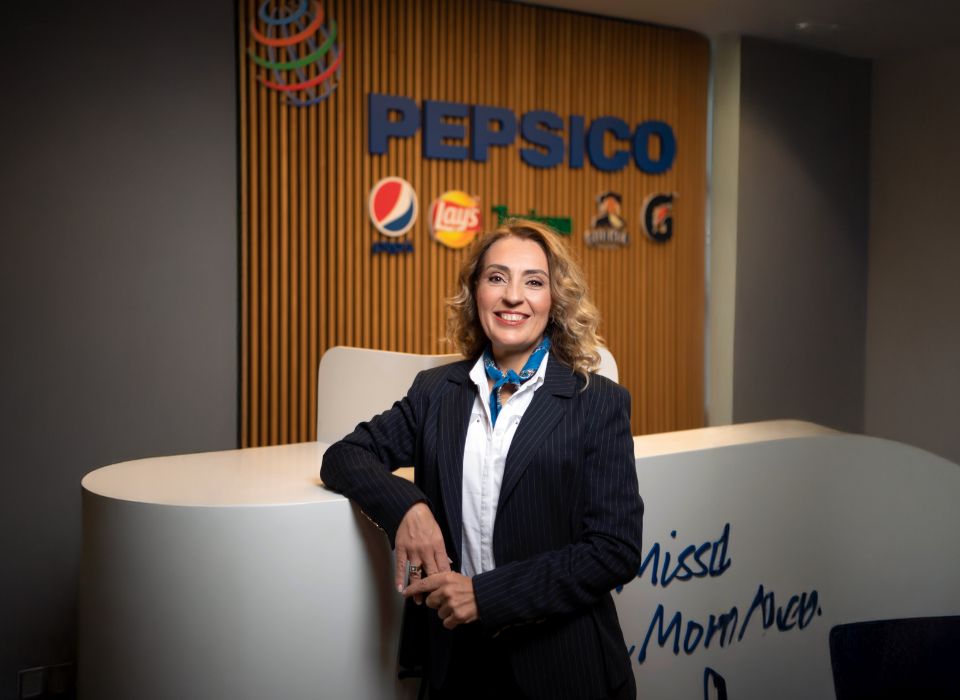
Esra İren, Senior Director of Corporate Relations and Sustainability Leader at PepsiCo Turkey: "With our Biomethane Facility investment, we have prevented 3,800 tons of carbon emissions that could be offset by 152,000 trees."
Making statements about the innovative environment and nature-focused projects implemented by PepsiCo Turkey on the occasion of World Environment Day, Esra İren, Senior Director of Corporate Relations and Sustainability at PepsiCo Turkey, said: "As PepsiCo Turkey, we have a wide sphere of impact ranging from production to the end consumer, from work we do with farmers in agriculture to collaborations we implement with different communities. We try to carry out all our actions with a focus on contributing to sustainable living. In this regard, creating more positive environmental impact in line with our Positive Value Chain agenda is among our priorities. In 2023, we set a first in Turkey by implementing the Biomethane Facility Project at our Manisa factory, where we process organic waste obtained from our production line.
In this way, by producing more biomethane gas that can replace natural gas, we reduce carbon emissions. At our facility, we process not only organic waste from our own factory, but also organic waste we procure from facilities in the vicinity through an industrial symbiosis approach. This allows us to use resources more efficiently and contribute to the circular economy through inter-industry cooperation. With our biomethane facility, in 2024 we produced biomethane gas equivalent to the annual natural gas needs of 686 homes, or in other words, enough energy to meet the annual electricity needs of 3,000 homes. In doing so, we achieved an important success by preventing 3,800 tons of carbon emissions that could be offset by 152,000 trees, contributing to carbon-free living. Our project did not remain only an inspiring project in Turkey. It began to be implemented as an exemplary project within PepsiCo's global operations. This both made us proud and increased our hopes for a sustainable future," she said.
Esra İren, Senior Director of Corporate Relations and Sustainability at PepsiCo Turkey, said: "With our 'One Drop One World' project, we can recycle up to 100 percent of the water used in our factories."
İren, noting that in addition to reducing absolute water consumption, they are working to recover water used in high-risk areas, stated: "Through a partnership with the Nature Conservation Center (DKM), with our 'One Drop One World' project implemented in the regions where our Tarsus, Izmir and Manisa factories are located, we return water to where it belongs, back to nature. In 2024, we took the first step of our project by returning the water we used at our Tarsus factory to the Berdan basin and to our farmer partners, and subsequently extended it to our factories in Izmir and Manisa. The project not only provides water recovery, but also supports farmers in the regions where our factories are located in reducing water use in agriculture through applied modern irrigation methods.
Within the scope of the project, in 2024 we returned 100 percent of the water used in our Manisa factory, 94 percent of the water used in our Izmir factory and 58 percent of the water used in our Tarsus factory back to nature. At the same time, as a company engaged in many agricultural activities and cooperating with farmers, we shared the knowledge we have accumulated from many activities and projects aimed at reducing water consumption in agriculture with our farmer partners through this project, contributing to increased awareness on this issue. We believe that this project will be a good example in terms of more conscious water use and returning water to nature, and will inspire everyone," she said.
PepsiCo Turkey among the first companies to reach 100 percent renewable electricity target
PepsiCo Turkey, which continues its investments to reduce carbon emissions under the Positive Value Chain heading, is among the first companies within the PepsiCo ecosystem to reach the 100 percent renewable electricity target worldwide. In addition to its new biomethane facility investment, the company meets 35 percent of its electricity needs through organic waste treatment facilities built in its food factories and previous investments. It procures the remaining electricity from solar panels and companies providing renewable energy.
While converting some of its fleets to electric vehicles, PepsiCo Turkey also became the first company to carry out food transportation in the fast-moving consumer goods sector using electric trains with a new project. Under this project, PepsiCo Turkey transported food via electric train from its Tarsus factory in the Akdeniz district of Mersin to its Suadiye factory in the Kartepe district of Kocaeli, covering a route exceeding 1,600 kilometers in both directions. Through this transportation, the company reduced carbon emissions by 83 percent compared to road-based transportation, setting a good example for carbon-free solutions in food logistics.
Gallery