A Simpler Recycling Process Enables Pure Raw Materials to Be Obtained from Acrylic Glass Without Using Solvents
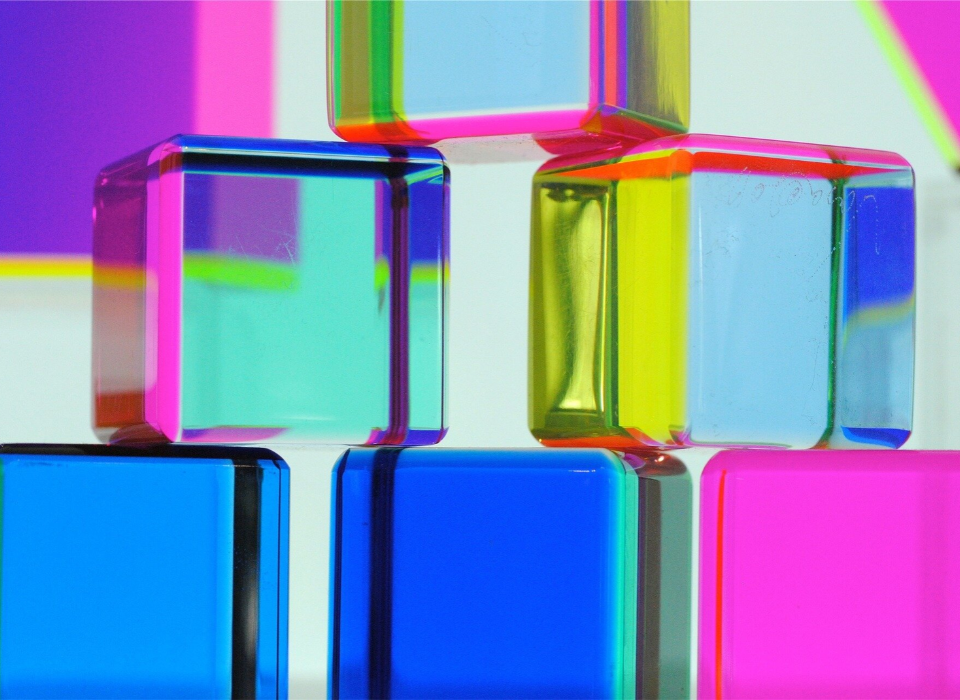
Large quantities of acrylic glass are used worldwide in a wide variety of applications, from window panes to automobile taillights and furniture. The polymer is also known under the brand name Plexiglas. Although it is extremely suitable for recycling, acrylic glass most often ends up as waste. ETH materials scientist Professor Athina Anastasaki has been working for years on ways to efficiently break down acrylic glass into its building blocks so that it can be reused. In previous research, her team had shown that this process, known as depolymerization, is possible in principle, but that it only occurs under certain conditions. For example, ETH researchers previously had to chemically modify polymer chains in order to add "weak links" to them. Other approaches required large amounts of solvent, or catalysts, or UV light to initiate or sustain depolymerization.
New approach saves energy and costs
The ETH professor and her team have developed a simpler, new method for recycling acrylic glass polymers. They published their findings in the journal Nature Chemistry. With this new method, the researchers can break down the polymer almost completely into its building blocks, called monomers. Monomer yield can reach up to 98 percent. Even if the starting material contains dye or impurities, the recovered material is pure. The resulting monomers can be used to produce new polymers of the same quality as those obtained during initial production. The process requires much less energy compared to other methods. Depolymerization begins at temperatures just above 200 degrees Celsius, whereas previously at least 400 degrees Celsius was required. In addition, no solvent is used in the process. Richard Whitfield, a former research associate in Anastasaki's team and the lead author of the study, says, "What makes our new approach so exciting is its simplicity."
A single substance is enough
At the heart of the new method is a single chemical compound belonging to the class of substances known as N-hydroxyimides. This commercially available, inexpensive reagent acts on the polymer chains of acrylic glass, breaking them down and releasing the monomers. Once the reagent is added, the reaction proceeds spontaneously. The choice of reagent was not accidental. "We conducted a systematic investigation until we found this substance." A single reagent is enough to initiate depolymerization. Anastasaki explains, "The only thing that surprised us was that a single chemical was really enough for the reaction." In their search for a suitable reagent, her team collaborated with Tae-Lim Choi and Gunnar Jeschke, professors of chemistry at ETH. Anastasaki emphasizes, "Without the excellent collaboration I had with these two colleagues, many questions would have remained unanswered."
Patent application filed, licensees being sought
Other methods used in chemical plastic recycling generally rely on the pyrolysis process, in which plastic polymers are broken down into their building blocks at high temperatures—usually above 400 degrees Celsius. In addition, the recovered monomers are often not particularly pure; the impurity level can be as high as 3 percent. This can negatively affect the quality of the plastic produced from these monomers. ETH Zurich has filed a patent application for the new method and is now looking for companies to license it.
Industry could adopt the method right away
The chemical industry has shown interest in the new method. One of its main advantages is that it can be implemented using existing infrastructure and standard processes. Anastasaki explains, "The disadvantage of our previous approaches was that companies would have had to change their processes and equipment in order to implement them. For most companies, this would have been too costly." The next step will be to apply the method on a larger scale and to understand the reaction mechanisms in detail. Using this knowledge, ETH researchers aim to develop substances that will further accelerate the breakdown of polymers and increase monomer yield. However, the method has one small limitation: it only works on acrylic glass. Different approaches are needed to break down other plastics into their building blocks. Nevertheless, the materials scientist remains optimistic: Anastasaki says, "We will try to apply the same principle to polystyrene, one of the most widely used plastics in the world."
Source
Richard Whitfield et al., Lower-temperature bulk depolymerization of commercial polymethacrylates, Nature Chemistry (2026). DOI: 10.1038/s41557-026-02232-4 Journal information: Nature Chemistry / https://phys.org/news/2026-10-simpler-recycling-recovers-pure-raw.html
Advertisement
Ad Space728 × 90