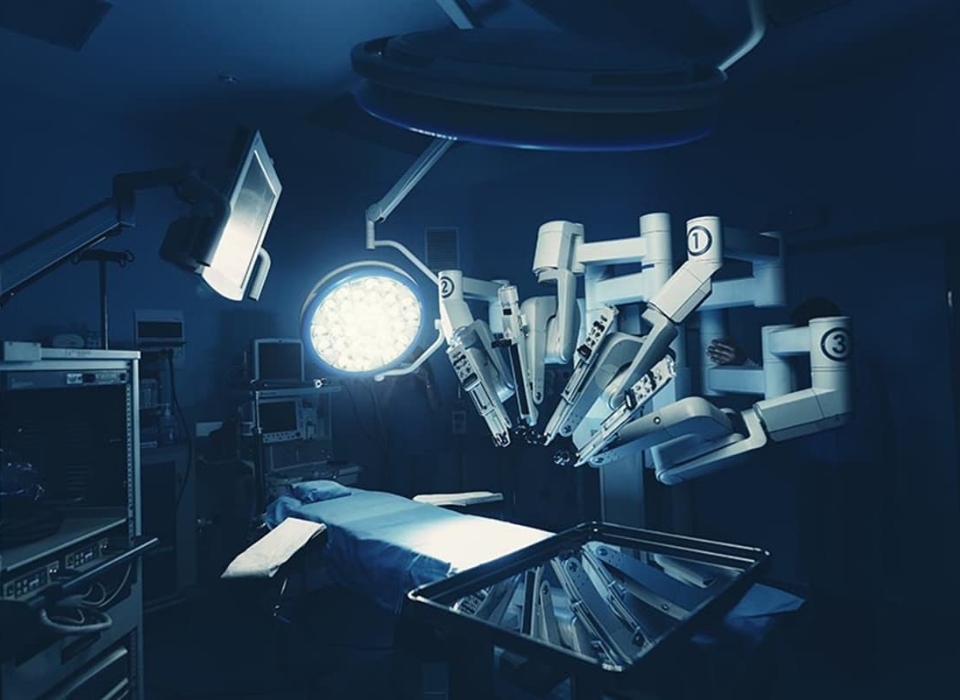
Robotic Surgery Eliminates Hand Tremors

Robotic surgery, one of the most advanced fields of medicine, stands out for its precision, comfort and safety. Robotic or robot-assisted surgery is an advanced technology-based method in which the surgeon controls robotic arms via a console.
Robotic surgery stands out as one of medicine's most advanced fields, distinguished by its precision, comfort and safety. Robotic or robot-assisted surgery is an advanced technology-based method in which the surgeon operates robotic arms through a console.
Noting that this system exceeds the limitations of the human hand particularly in delicate areas, offering clearer visualization and superior mobility, Prof. Dr. Altan Kır, Thoracic Surgery Specialist at Anadolu Health Center Hospital, stated: "Robotic surgery is frequently employed in all benign and malignant tumours of the lung, mediastinal cysts and tumours, surgical diseases of the esophagus, major airway and diaphragm-related surgical procedures."
Video-Assisted Thoracoscopic Surgery (VATS) and Robot-Assisted Thoracoscopic Surgery (RATS) are two methods that have come to the forefront in thoracic surgery in recent years. Describing VATS as a low-cost method in which the surgeon works at the patient's bedside with two-dimensional camera and instruments offering limited mobility, Prof. Dr. Altan Kır from Anadolu Health Center Hospital stated: "RATS, on the other hand, enables the surgeon to perform surgery with three-dimensional imaging and robotic instruments. While this method allows for more precise interventions, it also minimizes hand tremor. However, due to the lengthy learning curve of RATS and high maintenance costs, specialists decide which method to use based on the patient's condition, the surgeon's experience and the hospital's capabilities."
Prof. Dr. Altan Kır
Hospital stay shortens
Explaining that not every patient is suitable for robotic surgery, Specialist Prof. Dr. Altan Kır cautioned: "RATS is not recommended for patients with advanced pleural adhesions, large tumours that have spread to adjacent tissues, cases requiring emergency surgery, those with severe respiratory insufficiency and severely obese individuals. It is also not suitable for centres without robotic infrastructure or surgeons lacking sufficient experience."
Listing the advantages of robotic surgery, Kır stated: "High precision, less bleeding, surgery through small incisions, short hospital stay, less pain and an ergonomic working environment for the surgeon are the most important benefits of this method. High cost and lack of tactile feedback can be listed as the most significant disadvantages."
Robots could guide surgeons
Emphasizing that artificial intelligence plays an important role in the future of robotic surgery, Kır noted: "Both personalized surgical planning from CT and MR imaging and automatic determination of blood vessels and resection margins—that is, the surgical line where a tumour or diseased tissue is removed—will become possible. Additionally, the surgeon's performance during the operation could be analysed using artificial intelligence to provide real-time feedback. In the most advanced scenario, autonomous robots learning from thousands of surgical procedures could guide surgeons by performing surgical procedures in the safest and most effective manner. Of course, these developments bring new discussions regarding ethics, legal responsibilities and education."
Gallery