Optogenetics: The Method Illuminating the Brain's Secrets
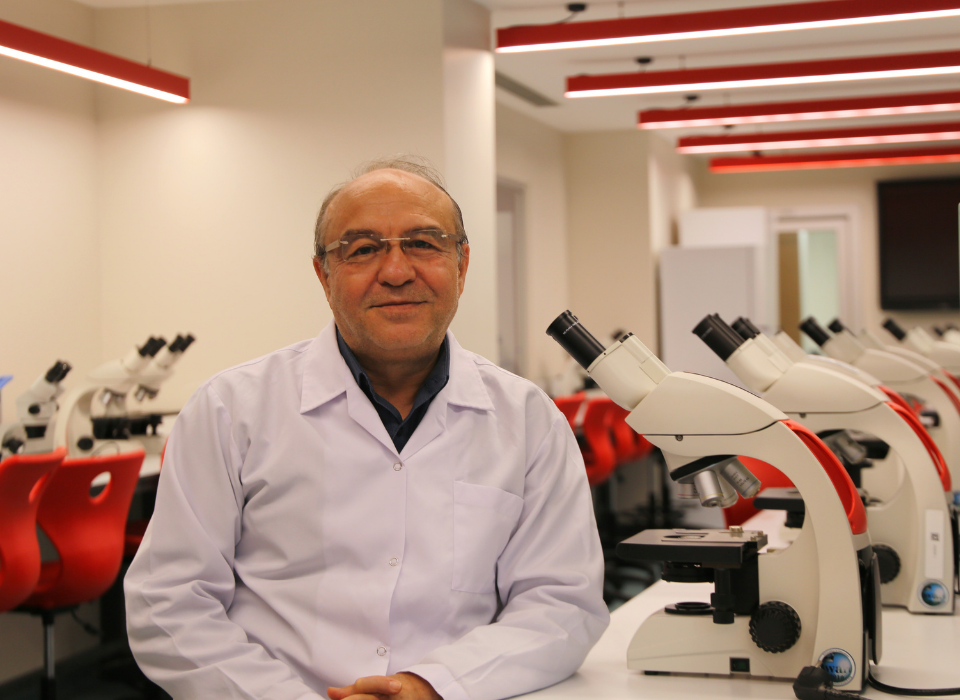
Optogenetics makes it possible to investigate the functioning of the brain by controlling the activities of selected nerve cells through light. Used in the study of processes such as memory, fear, sleep, addiction and movement control, the method also contributes to understanding the mechanisms underlying neurological and psychiatric diseases. Üsküdar Üniversitesi Rector's Advisor and Molecular Biology and Genetics (English) Faculty Member Prof. Dr. Muhsin Konuk noted that optogenetics is used today predominantly as a powerful laboratory research tool, emphasizing that the method brings together the disciplines of genetics, neuroscience and engineering.
The discoveries of Karl Deisseroth, Peter Hegemann and Georg Nagel in the field of light-gated ion channels and optogenetics brought this technology, which enables nerve cells to be controlled with light, onto the agenda of the scientific world. Prof. Dr. Muhsin Konuk evaluated the development of optogenetics, its areas of use in research, and the current state of applications aimed at treatment in humans.
From an Algal Cell to Brain Research
Studies conducted on the light-seeking single-celled green alga Chlamydomonas reinhardtii played a decisive role in the development of optogenetics. The discovery of this alga's light-sensitive proteins laid the groundwork, over time, for the development of a research method that enables specific nerve cells to be controlled with light.
Prof. Dr. Muhsin Konuk, drawing attention to the fact that basic science research can be transformed into important technological applications in different fields, said, "The discovery of the protein that enables an algal cell, Chlamydomonas reinhardtii, to orient itself toward light turned, within approximately 20 years, into a technology that allows scientists to switch specific brain cells on and off with light."
Noting that the foundation of the method is the convergence of genetic and light technologies, Konuk defined optogenetics as a method of controlling the activities of genetically selected cells using light.
Nerve Cells Can Be Controlled Within Milliseconds
One of the most important features of optogenetics is its ability to focus on specific groups of cells and to allow intervention in the activities of these cells with high temporal precision. The method is used particularly to investigate the functions of nerve cells and the connections they form with one another.
Prof. Dr. Konuk explained the working principle of the application as follows:
"A researcher can, for example, make only specific dopamine-producing neurons among millions of brain cells sensitive to light. Afterward, by sending light into the brain via a very thin optical fiber, these cells can be activated or silenced within milliseconds."
Through this method, researchers can examine which behaviors a specific group of cells plays a role in. The combination of cell-type selectivity with timing precision provides important experimental opportunities in neuroscience research.
Neural Circuits Underlying Fear Behavior Are Being Studied
Observing that a particular region of the brain becomes active during a behavior and experimentally testing that region's effect on the behavior are different processes. Optogenetics helps investigate the cause-and-effect relationships between behaviors and these circuits by controlling the activities of specific neural circuits.
Prof. Dr. Konuk, illustrating this feature of the method through fear behavior, noted that how behavior changes as a result of activating or suppressing a specific neural circuit with light can be examined. Thus, researchers can evaluate the role of neural circuits in the formation of behaviors in greater detail.
Used in Research on Memory, Sleep and Addiction
Beyond being a method specific to a single disease or brain function, optogenetics is used to investigate the neural circuits underlying different behaviors and cognitive processes. Memory, reward, motivation, sleep, fear, movement and social behavior are among the main areas of these studies.
Prof. Dr. Konuk stated that neural circuits associated with conditions such as Parkinson's disease, depression, addiction and pain are also being investigated with optogenetic methods. He noted that these studies aim not only to understand the biological mechanisms of diseases but also to form a scientific basis for treatment strategies that could be developed in the future.
At the same time, the results obtained in research must be distinguished from clinical applications. The opportunities optogenetics offers in examining disease mechanisms do not mean that the method is an approved treatment for all diseases.
Research Success Does Not Mean Routine Treatment
Developments in the field of optogenetics present important opportunities, particularly for researching brain diseases. However, comprehensive research into safety and efficacy is needed before the method can be used for treatment purposes in humans.
In his assessment of the method's current status, Prof. Dr. Konuk stated, "For diseases other than those of the eye, particularly brain-related diseases, optogenetics is not yet an approved treatment; it is an advanced research tool."
Emphasizing that findings obtained in animal experiments do not directly indicate that the same results will be obtained in humans, Konuk noted that optogenetics is currently used predominantly as a powerful laboratory research tool for unraveling the mechanisms underlying diseases.
Human Studies on Vision Loss Continue
One of the prominent areas in research on the application of optogenetics in humans is vision loss. Particularly in the hereditary retinal disease known as retinitis pigmentosa, studies are being carried out on restoring or improving visual function by utilizing light-sensitive proteins.
Noting that the eye offers different possibilities from the brain in terms of access to light, Prof. Dr. Konuk stated that results indicating partial restoration of visual function have been reported in this field. Konuk noted that Phase 1/2 human clinical trials are ongoing in this area and that notable results have been published.
New Opportunities in Parkinson's and Epilepsy Research
In research on Parkinson's disease, neural pathways associated with movement control are being examined using optogenetic methods. Studies are investigating how the stimulation or suppression of specific cell groups affects movement symptoms in laboratory animals.
In epilepsy studies, the focus is on controlling excessive nerve cell activity. Intervening in cellular activity through light-sensitive proteins is being evaluated in terms of understanding the mechanisms underlying seizures and developing new research approaches.
Prof. Dr. Konuk drew attention to the need to maintain the distinction between experimental findings and treatments that could be used in humans in both areas.
Genetics, Neuroscience and Engineering Work Together
Conducting optogenetics research requires the collaboration of different fields of expertise and an advanced research infrastructure. In addition to molecular biology and virology laboratories, laser and LED light sources, electrophysiological recording systems, advanced imaging capabilities and laboratory animal research infrastructure are among the basic components of these studies.
Prof. Dr. Muhsin Konuk expressed the interdisciplinary nature of optogenetics with the words, "Optogenetics is a flawless combination of the disciplines of genetics, neuroscience and engineering."
Noting that optogenetics studies in Türkiye are carried out at a limited number of research centers and universities with contributions from the fields of genetics, engineering and neuroscience, Konuk said he expects interest in the field to increase.
Also addressing Üsküdar Üniversitesi's research facilities, Konuk stated that the university possesses most of the infrastructure needed to carry out optogenetics studies.
Optogenetics offers the scientific world a powerful research tool for understanding the functioning of nerve cells and the biological foundations of behaviors. With the development of the method, it is aimed to examine the mechanisms of neurological and psychiatric diseases in greater detail and to lay the scientific groundwork for new treatment approaches in the future.
Advertisement
Ad Space728 × 90