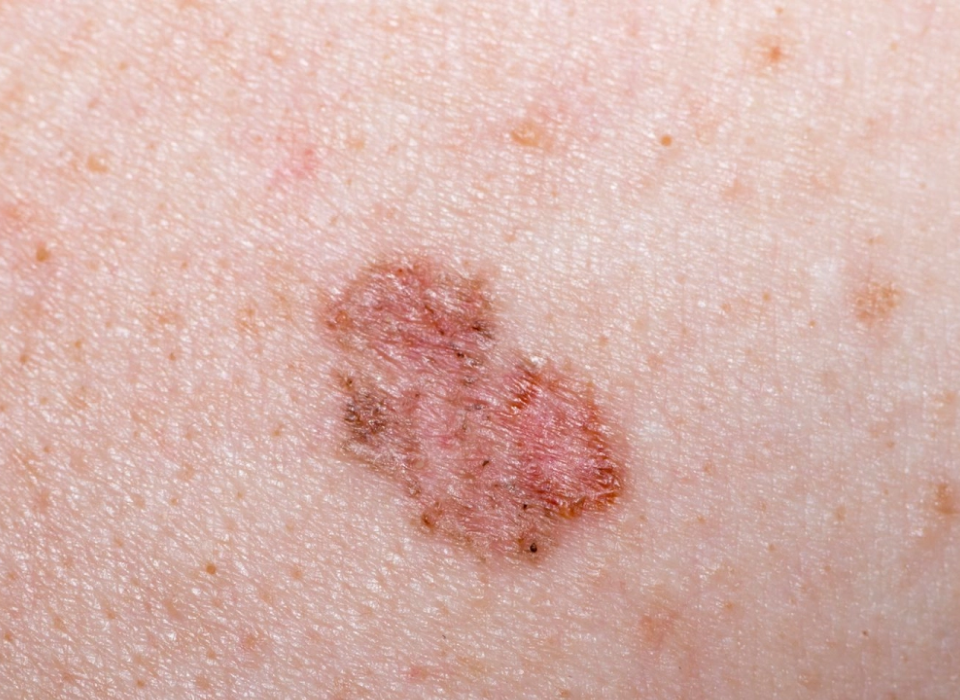
Six Warning Signs of Skin Cancer to Watch For

Assoc. Prof. Dr. Aslı Tatlıparmak from the Dermatology Department of Memorial Bahçelievler Hospital shared what needs to be known about skin cancer.
Dr. Aslı Tatlıparmak, Dermatology Department, Memorial Bahçelievler Hospital, shared essential information about skin cancer.
Skin cancer develops when cells in the epidermis, the outermost layer of the skin, grow abnormally due to unrepaired DNA damage. Cell growth in the epidermis leads to rapid multiplication of skin cells and formation of malignant tumors. There are three different types, and early detection enables achieving successful treatment outcomes.
Skin cancer is quite common in the population. It has three different types: basal cell carcinoma (BCC), squamous cell carcinoma (SCC), and melanoma. Observable changes in skin lesions, wounds, bleeding, and peeling of skin—known as common symptoms—help detect skin cancer at its earliest stage. Monitoring suspicious changes in the skin provides considerable benefit for successful skin cancer treatment.
More common in men than women
Skin cancer is the most frequently occurring cancer type worldwide. Its frequency continues to increase over the years. In men, skin cancer is the 5th most common cancer type, while in women it is the 7th. The prevalence in the population is as high as 2%. It is generally more common in elderly individuals. This is because as age advances, skin has been exposed to more UV rays and DNA damage accumulation in cells increases. Additionally, skin cancer is more common in men than in women.
1. Signs to suspect skin cancer are as follows;
2. Non-healing wounds on the skin (for 2-3 weeks), bleeding, scabbing, and wounds that heal and then bleed again,
3. Dome-shaped growth, that is, a mass protruding from the skin, sometimes scabbed and sometimes bleeding masses or wounds,
4. Irregularly bordered, asymmetric spot enlargements,
5. Observation of moles larger than 6 mm in diameter.
Diagnosis can be made through physical examination and biopsy
First, a specialist dermatologist evaluates whether any changes are detected in existing moles or other skin lesions on the body, or whether there are new mole growths. Subsequently, conducting a physical examination over all skin including the scalp, ears, palms, soles, toes, and other special areas would be the correct step. Following the physical examination, if a condition suspected of skin cancer is observed, the biopsy method can be applied. In a biopsy, a tissue sample is taken and examined under a microscope by a pathology specialist. After examination of the sample, whether the skin changes are skin cancer is established and, if skin cancer is present, which type of skin cancer it is is determined, and the treatment process begins.
Skin cancer treatment varies depending on the condition of the affected area
Skin cancer treatment is a cancer type that requires personalized treatment. The size, location, and depth of the tumor and the patient's general health condition will be determining factors in planning this treatment. Generally, excisional surgery is applied in treating skin cancer. In this procedure, the tumor is removed including some healthy tissue around it. Another procedure is known as Mohs micrographic surgery. Particularly preferred for cancers in critical areas such as the face, in this method the tumor is removed layer by layer and each layer is examined under a microscope. The procedure continues until all cancerous cells are completely cleared.
This method maximizes preservation of healthy tissue and reduces recurrence rates. Apart from these treatments, topical treatments are also applied in skin cancer. For some superficial basal cell carcinomas, topical creams (for example, creams containing imiquimod or 5-fluorouracil) can be used. Additionally, photodynamic therapy (PDT) can be used because it is effective in treating skin cancer. In this method, first a sensitizing chemical is applied to the cancerous tissue. After a few hours, light of a specific wavelength is directed to the area. The light given in this procedure triggers the applied chemical to destroy cancerous cells. Which of all these treatments will be applied to which patient should be planned individually based on the physician's examination and pathology results.
Sunscreen should be refreshed every 2 hours
Risk factors causing skin cancer and some measures that should be taken to protect from UV rays are as follows:
• Do not forget to use a broad-spectrum sunscreen with an SPF of 15 or higher every day.
• Refresh your sunscreen every two hours during the day.
• If shade is available in your location, be sure to stay in the shade.
• When possible, make an effort to wear a light, long-sleeved shirt, trousers, a wide-brimmed hat, and UV-protective sunglasses.
• Monitor your skin, examine your skin regularly, and do not neglect to consult your doctor if you notice any striking changes.
Protecting from the harmful effects of the sun reduces the risk of skin cancer
Avoiding direct sun exposure and being careful not to be outdoors between 10:00 and 14:00 hours when sun rays are strongest is the most important step in preventing skin cancer formation. If it is necessary to be outdoors, care should be taken to wait in a shaded area. In particular, it is very important to avoid harmful procedures such as tanning beds, which both women and men frequently choose for aesthetic purposes. The ultraviolet light given to the body in tanning beds can cause skin cancer and premature skin aging. It is important not to forget that unprotected and uncontrolled sun exposure is the most important cause of skin cancer formation.
Gallery