Turkchem Fairs Are Paving the Way for New Collaborations
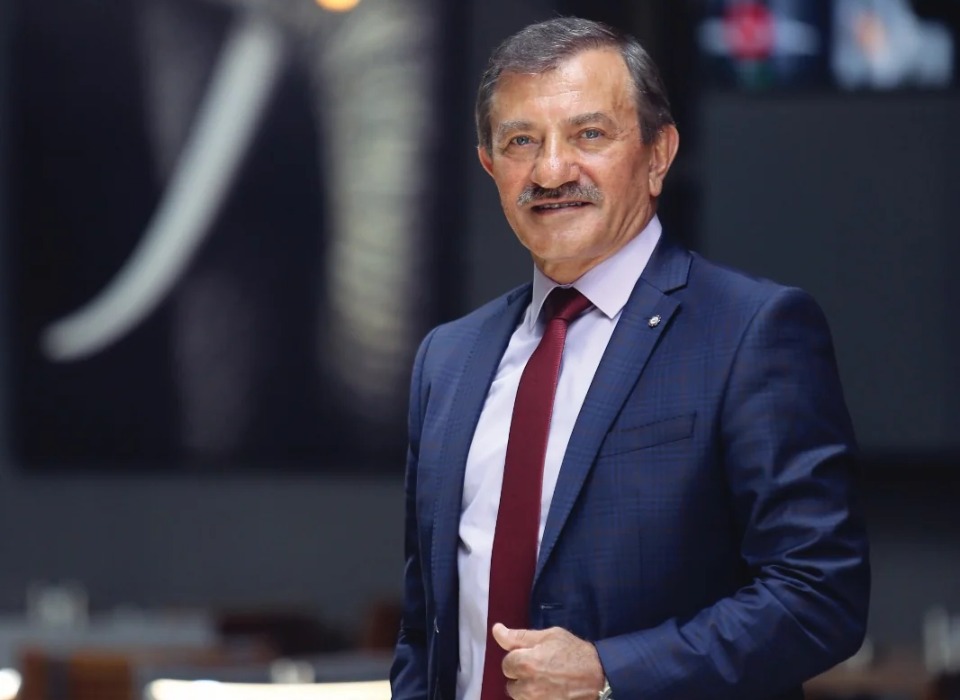
In our interview, PLASFED Chairman of the Board Ömer Karadeniz drew attention to the production and export potential of Türkiye's plastics industry. Touching on the importance of Turkchem Eurasia for the sector, Karadeniz stated that Turkchem Azerbaijan would also support new collaborations between Türkiye and Azerbaijan.
First of all, we would like to get to know PLASFED more closely. Could you tell us about PLASFED's journey in the sector, its work in representing the industry, and producing solutions to common problems?
The plastics industry is one of the areas of strategic importance for Türkiye's industry in terms of production capacity and export power. My own journey in the sector has been shaped around getting to know the dynamics of production closely, taking on the responsibilities of being an industrialist, and contributing to the development of the sector. Having been in the sector for many years has allowed me to closely observe the problems and needs faced by businesses.
I do not view being an industrialist as merely manufacturing. Following technology, creating employment, adapting to changing conditions, and contributing to the national economy are also important parts of this responsibility. However, for the sustainable development of the sector, industrialists need to act jointly and seek solutions to problems together.
Founded on 28 October 2011, PLASFED is the institutional representation point of this joint approach. Today, our federation, which represents approximately 1,750 member companies, brings together associations operating in different areas of Türkiye's plastics industry under the same roof. Our main task is to convey the sector's common problems to the relevant institutions, contribute to solution processes, and strengthen the position of the plastics industry in the national economy.
Our sector, which serves a wide production chain from packaging to automotive, from white goods to construction, and from healthcare to agriculture, has many common agenda items such as raw materials, financing, energy costs, exports, and sustainability. As PLASFED, we maintain our communication with public institutions, professional organizations, and other sector representatives around these topics.
In addition, through our PLASFED Magazine and digital communication channels, we convey the sector's production power, investments, and developments to the public. Our goal is not only to seek solutions to the plastics industry's current problems, but also to contribute to its preparation for future production conditions.
How do you assess the current state of Türkiye's plastics industry? Looking at it in terms of access to financing, production costs, and export competitiveness, what is the sector's primary issue awaiting a solution?
Türkiye's plastics industry is one of our country's important industrial branches in terms of production capacity and export performance. Our annual production capacity of over 10 million tons, our economic size of approximately 50 billion dollars, and the 9.5 billion dollars in exports we achieved in 2025, as well as our indirect exports of 16 billion dollars, demonstrate the strength of our sector. However, maintaining this strong infrastructure is becoming increasingly difficult under current economic conditions. Access to financing, high production costs, and the preservation of competitiveness in international markets are at the top of our industrialists' agenda. In particular, the difficulties experienced in accessing financing make it harder for businesses both to sustain their production and to make new investments. Raw material purchasing, production, and collection processes in the plastics sector require significant working capital.
High financing costs directly affect companies' cash flow and investment decisions. Energy, labor, logistics, and raw material costs also place considerable pressure on our producers. While competing in export markets in terms of price and quality, we need to preserve our cost advantage. Producers in competitor countries having access to more favorable financing and production conditions makes it harder for Turkish industrialists to compete. Our primary expectation is the establishment of economic conditions that support production and exports. Industrial enterprises need to be able to access cost-effective financing, exporters need to be supported, and policies that will reduce production costs need to be developed. Industrial investments require long-term decisions. An environment needs to be created in which industrialists can see ahead, calculate their costs, and confidently make investment decisions. Türkiye's plastics industry has the power to reach a much more advanced point with its production experience and export potential.
Dependence on imported raw materials is one of the sector's important agenda items. What steps do you think should be prioritized in terms of domestic petrochemical investments and collaboration with the chemical industry in order to strengthen supply security?
One of the most important structural problems of the plastics industry is its dependence on imported raw materials. The fact that approximately 85-90 percent of the raw materials used in our sector are met through imports makes our producers vulnerable to exchange rate fluctuations, global price movements, and disruptions in supply chains. Raw materials constitute the largest cost item in plastic production. This expense, which can reach 70-85 percent of the total cost in some product groups, directly affects companies' competitiveness. We view increasing domestic petrochemical investments as a strategic priority for a permanent solution to this problem.
Considering Türkiye's plastic production capacity and domestic market size, there is a need for a stronger production infrastructure in the petrochemical field. Public-private sector cooperation, suitable financing mechanisms, and a predictable investment environment are of great importance for these investments to materialize. Furthermore, we need to develop our domestic production capacity not only in basic raw materials, but also in specialty polymers and value-added chemical products.
The chemical and plastics industries are two important production areas that complement each other. Therefore, cooperation between the two sectors needs to be strengthened in areas such as R&D, product development, next-generation materials, and production technologies. Developing recycling capacity will make a great contribution to raw material supply security. Converting plastic waste into high-quality secondary raw materials will enable part of the imported raw material need to be met domestically. Our goal here is not to completely eliminate imports, but to reduce the risks created by import dependence, diversify supply sources, and strengthen domestic production. Steps to be taken in this regard will also increase the international competitiveness of Türkiye's plastics industry.
How are the circular economy and recycling shaping the future of the plastics sector? What is needed for this transformation to become an opportunity that creates added value and competitive advantage for companies, not just a compliance obligation?
The circular economy and recycling are among the most important transformation topics determining the future of the plastics sector. The efficient use of resources, the conversion of waste into economic value, and the reduction of environmental impacts are now among the core priorities of global industry. Thanks to its lightness, durability, and properties suitable for different needs, plastic is an indispensable material in many areas, from packaging to automotive, and from healthcare to construction. What matters here is that the entire process, from the production of plastic to its use and end of life, is managed correctly. Türkiye needs to develop its recycling infrastructure, increase technological investments, and widen the production of high-quality recycled raw materials. For this, waste needs to be separated at the source. Local governments, public institutions, producers, recycling companies, and consumers are joint stakeholders in this process. Environmental and sustainability criteria are becoming increasingly decisive in international markets, especially the European Union. Our exporting companies need to comply with these regulations, be able to certify the environmental performance of their products, and make their production processes traceable.
However, we do not want this transformation to mean only new costs for companies. When managed correctly, the circular economy can create new investment areas, technological development, and value-added production opportunities. Recycling technologies, sustainable product design, and next-generation materials offer important opportunities in this regard. In particular, small and medium-sized enterprises should not be left out of this transformation. It is important that machinery renewal, energy efficiency, and R&D investments be supported with appropriate incentives and financing mechanisms.
Our approach is to turn sustainability into a competitive advantage for the plastics industry, rather than merely an obligation. Türkiye has the potential to become a regional center not only in production power but also in recycling technologies and the development of sustainable materials.
What are your expectations on behalf of the plastics sector from Turkchem Eurasia? What kind of contribution do you expect the first Turkchem Azerbaijan, which Artkim will hold in Baku on 6-8 April 2027, to make in terms of sectoral cooperation and access to new markets between Türkiye and Azerbaijan?
Turkchem Eurasia is one of the important organizations that bring together different areas of the chemical industry and offer sector representatives the opportunity to establish new business connections and follow international developments. Considering the strong relationship between the plastics and chemical industries, such fairs have special importance for our sector. Polymers, additives, paints and pigments, auxiliary chemicals, and specialty raw materials are among the basic elements of plastic production. Therefore, developments in the chemical sector directly affect the plastics industry as well. Our expectation from Turkchem Eurasia is that it will contribute to strengthening cooperation between the two sectors, establishing new trade connections, and providing our domestic producers access to international markets. In addition to trade negotiations, fairs are important platforms where technological developments and new investment opportunities are evaluated. We also consider Turkchem Azerbaijan, which Artkim will hold for the first time in Baku on 6-8 April 2027, to be an important initiative. The historical, cultural, and economic ties between Türkiye and Azerbaijan offer significant opportunities for establishing stronger collaborations in the fields of industry and trade.
Azerbaijan's energy resources, developing industrial infrastructure, and regional position carry notable potential in terms of the chemical and plastics sectors. Türkiye's experience in plastic production and export experience can complement the investment and trade opportunities offered by Azerbaijan.
I believe that new collaborations can be developed between the two countries, especially in the fields of petrochemicals, plastic raw materials, packaging, and recycling. We expect Turkchem Azerbaijan to bring together Turkish and Azerbaijani producers, investors, and sector representatives, contributing to the transformation of these relationships into concrete commercial agreements.
Considering Baku's geographical location, the fair also has the potential to be a regional meeting point opening up to the Caucasus and surrounding markets. We find this organization valuable in terms of our Turkish companies reaching new customers, developing distributorship relationships, and evaluating joint investment opportunities.
As PLASFED, we attach importance to increasing the international representation power of our sector and to our companies accessing new markets. What matters to us is that fairs do not remain merely a few-day events, but rather transform into long-term commercial relationships, joint projects, and lasting economic gains. I believe that Turkchem Eurasia and Turkchem Azerbaijan will contribute to this goal.
Interview: B. Serhat Cengiz