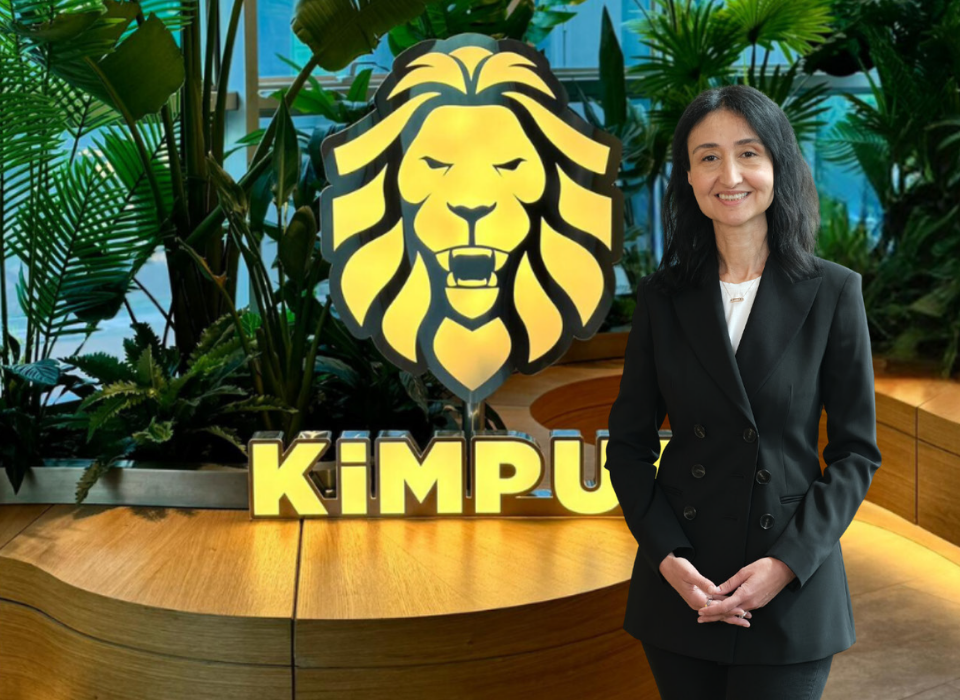
Standing out with its wide product range, strong production infrastructure and international operating network, Kimpur exports to more than 55 countries across five continents. In our interview, Kimpur CEO Cavidan Karaca shared valuable insights with our readers on the company's growth targets as well as its activities in sustainability and digital transformation.
Feature: Murat Soygür
Standing out with its broad product range, strong production infrastructure and international operational network, Kimpur exports to over 55 countries across five continents. In a feature we conducted, Kimpur CEO Cavidan Karaca shared valuable information with our readers about Kimpur's growth targets as well as its activities in sustainability and digital transformation.
Could you tell us briefly about yourself and your professional background?
I graduated from the Department of Mechanical Engineering at Middle East Technical University in 1992. I am married and have one daughter.
For approximately thirty years, I have held management positions in procurement and production functions across different sectors, and have also provided consulting services in management consulting, crisis management and corporate transformation, and served as general manager. In 2014, I joined Kimpur as CEO—Turkey's first domestically-funded 'Polyurethane System House', which has since become the region's largest capacity system house.
It is a great privilege to witness rapid growth and transformation in the sector alongside our company. Moreover, as one of the few female CEOs in our sector, shaping this transformation not only in business but also in inspiring and shaping the future of women in the sector is an extremely valuable experience for me.
Could you provide information about the products and services offered by Kimpur?
At Kimpur, we offer high-quality and innovative polyurethane solutions. Our extensive product portfolio, comprising over 600 systems, provides tailored solutions for many sectors such as footwear, automotive, construction-insulation, furniture, heating-cooling. Moreover, through our work focused on sustainability and innovation, we are developing systems with bio-based content, systems made with recycled materials (post-consumer PET, graphene obtained from waste automotive tires, etc.), and low-carbon emission products. Beyond product supply, we aim to provide our customers with specialized technical support and R&D services to provide solutions best suited to their needs.
What are the core strategies that have enabled Kimpur to rank among Turkey's largest 500 industrial enterprises?
Being among Turkey's largest 500 industrial enterprises and strengthening this position every year at Kimpur is a result of our experience exceeding 40 years, our strong vision and our innovative approach. This year we moved up 7 places to rank 181st. The foundation of our success lies in our sustainable growth targets, strong financial management and strategy for effective positioning in global markets. In this context, strengthening our presence in global markets, increasing customer satisfaction, solidifying our brand recognition and being ready for new partnerships are among our priorities. We are also shaping our investments according to these objectives.
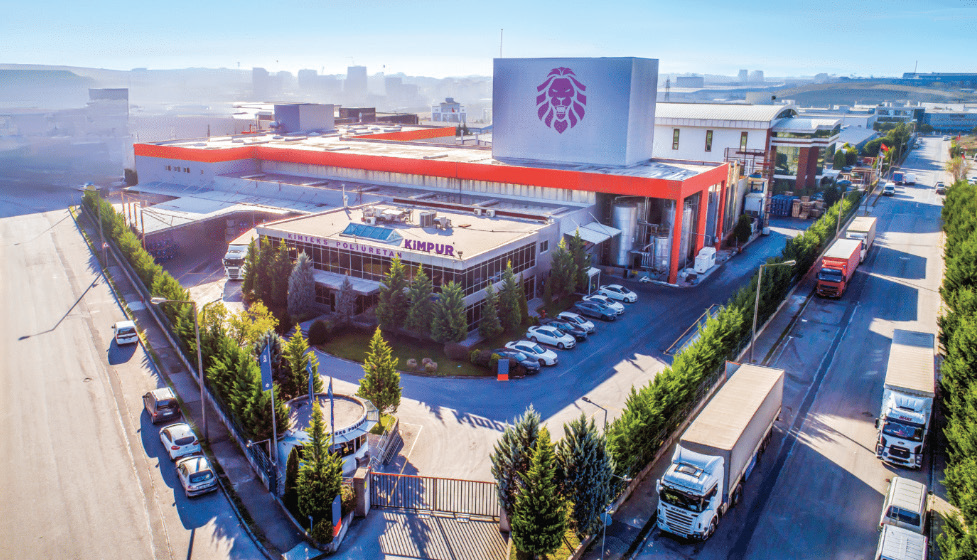
For example, thanks to the strategic investment we made in our Düzce facility, we increased our production capacity by 43 percent, reaching 281,000 tonnes. With our modern infrastructure and flexible production capabilities, we can respond to our customers' expectations much faster and more effectively.
Last year we increased our exports by 36.6 percent, reaching over 55 countries across five continents. We crowned this success with important awards and recognition, including first place in our category at İKMİB (Istanbul Chemical Substances and Products Exporters Association) Export Stars and a 99-place rise in the TİM (Turkish Exporters Assembly) Top 1000 list.
Our R&D center is our strongest aspect in terms of innovative product development and adaptation to technology. To add value to our sector, we conduct studies not only with our own R&D capacity but also through collaborations with our international partners. The Biodesign4Insulation project we are carrying out under the Eurostars-3 Programme is a good example of low-emission and sustainable PU solutions.
Behind all these efforts lies our agile organizational structure that can quickly adapt to changing market conditions. In short; we bring together financial discipline, global vision, innovation capacity and sustainability understanding in a holistic strategy.
Could you provide information about your digital transformation initiatives?
Digital transformation is one of our strategic priorities at Kimpur. We are rapidly integrating new technologies into all our processes from production to human resources, from R&D to energy management; we work with a data-driven, flexible and agile structure. Our Digitalization Committee coordinates technology investments, software integrations, data security and performance monitoring. We manage our production, warehouse, maintenance-repair, quality control and logistics processes with centralized digital platforms; we increase data accuracy with barcode systems and handheld terminals. We monitor R&D projects on a digital platform and improve all processes with artificial intelligence-assisted analysis.
Financial reporting and control are conducted with digital infrastructure providing real-time data flow; with decision support systems and artificial intelligence analysis, we make fast and accurate decisions and detect risks early. In the Human Resources field, we monitor performance and development areas with Feedback and Kudos systems, and strengthen employee experience with 360° feedback and social recognition. In internal communications, we provide project tracking, sprint planning and task management through the Velocity platform.
In energy efficiency, with sensor and automation solutions we monitor waste heat recovery, insulation, compressed air control and process optimization in real time. Through Digital Maturity Measurement, we identified our strong areas and improvement areas. Within the scope of the action plan we prepared in this context, we aim to deepen our digitalization efforts and, within the scope of the Digital Transformation Center; increase our operational excellence and global competitive capacity.
What are Kimpur's priority objectives in the area of sustainability? Could you describe projects you have implemented in line with these objectives?
Sustainability is a long-term journey at the center of our strategy. First of all, I want to state that we are proud to have certified our success on this journey internationally with the Ecovadis Silver Medal and to rank in the top 50 among approximately 500 chemistry companies worldwide in the London Stock Exchange Group (LSEG) assessment.
We have identified our sustainability priorities as climate crisis and carbon management, sustainable growth, sustainable product management, worker rights, supply chain management and innovation and technology. In each heading, we set concrete targets in environmental, social and economic dimensions and regularly monitor our progress.
In climate crisis and carbon management, we target reducing Scope 1 and 2 emission intensity per unit by 33 percent by 2030. In 2024, despite a 8 percent increase in production volume, our total emissions decreased by 1 percent compared to the previous year; our per-unit emission intensity decreased by 8 percent.
We have also recorded strong progress on the energy efficiency side. Through projects such as waste heat recovery system, improvement of hot water circulation system, insulation improvements, prevention of leaks in compressed air systems and process optimization, we reduced our per-unit energy consumption intensity by 7 percent compared to 2023. We also increased our renewable energy usage ratio through solar power plants at our Gebze and Düzce factories.
In sustainable product management, we aim to complete lifecycle assessment calculations for 99 percent of our systems and increase the proportion of sustainable products in our total sales to 25 percent by 2030. As of 2024, we have completed product lifecycle assessment calculations for 69 percent of our products. To increase these ratios, we conduct work in many areas from R&D to production, from collaborations to supply chain. The decarbonization projects we have developed with our international partners using a symbiotic approach are an important part of these efforts. The Biodesign4Insulation project, which I mentioned earlier and are carrying out under Eurostars-3, is one of the prominent examples among these projects.
In worker rights, inclusivity and safe working environment are among our priorities. We aim not to let the ratio of white-collar female employees fall below 40 percent and to increase the proportion of women on the management board to 28 percent. In 2024, we closed the proportion of white-collar female employees at 37 percent, a value close to our target. In our management board, we increased the proportion of female employees to 40 percent. In addition, ensuring that our score in employee engagement surveys does not fall below 75 is among our objectives. We conduct intensive work in this context; we increase our fringe benefits and development opportunities year after year. As a result of these efforts, we also earned the Happy Place to Work certificate this year.
In economic performance and sustainable growth, taking 2022 as a baseline, we aim to increase our total sales volume by 100 percent by 2028 and our export markets by 200 percent. Moreover, in recent months we have started using consumer post-waste PET recycled at our Düzce facility in polyurethane systems. Our target in this context is to reach a sales capacity of 5,000 tonnes by 2030.
In supply chain management, our objective is to assess all our critical suppliers according to environmental, social and governance criteria by 2030. Increasing alternative raw material sources is also among our priorities.
In the area of innovation and technology, we increase the budget allocated to digitalization efforts by 5 percent each year. With these investments, we integrate technological solutions aimed at energy efficiency, waste management and carbon reduction into our processes.
What are Kimpur's short and medium-term growth targets? Do you have plans to enter new markets?
As Kimpur, our aim in the short and medium term is to provide balanced, sustainable growth by strengthening our capacity and global reach. In 2024, we made a strategic partnership with Ravago Petrokimya A.Ş., moving all polyurethane reactors to our Düzce facility. This year we successfully commissioned all of these reactors. The capacity we increased with the Ravago investment is strong enough to support our five-year growth targets.
In exports, we plan to increase our share to 50 percent by 2028. We are strengthening our position in Europe with our Latvia facility; through our offices in the USA, UK and Germany, we provide on-site customer support.
In line with increasing demand for sustainable products, at our Düzce facility we have begun producing recycled-content polyester polyol by chemically recycling post-consumer PET bottle waste. With depolymerization technology, we substitute a portion of fossil-based raw materials with recycled materials, reducing both plastic waste and resource consumption. We will expand this solution, initially developed for sandwich panel production, to our other product groups in due course.
We will capitalize on the opportunities created by tightening carbon and energy efficiency regulations in Europe and North America, putting forward our sustainable systems containing bio-based and recycled materials in construction, insulation, automotive and industrial applications.
The IATF 16949 certification we obtained in 2024 strengthens our presence in the automotive market; our acceptance into the Turquality Brand Support Programme will enable us to benefit from incentives that will increase our effectiveness in global markets. With the development roadmap we have prepared, we will accelerate our journey to becoming a global brand.
We will also play an active role in rapidly growing markets such as Asia, Latin America and the Middle East—particularly Saudi Arabia. Large-scale projects in these regions are increasing demand for insulation and high-performance materials.
In short, with our strong production capacity, sustainable product portfolio, increasing presence in the automotive sector, Turquality support and strategic investments, we aim to both deepen in existing markets and accelerate our global growth by entering new markets.
What are your outlooks for the future of the polyurethane sector?
We foresee three main trends that will be decisive in the future of the polyurethane sector: sustainability, regulations and qualified human resources. First and foremost, we see that sustainability demand will become much more dominant on a global scale. Carbon neutral targets, energy efficiency requirements and incentives for recycled materials will directly impact product development processes in our sector. The widespread adoption of polyurethane systems with bio-based and recycled content will shape demand in both construction-insulation and critical sectors such as automotive.
Second, regulations will continue to be one of the strongest factors determining the direction of the sector. Particularly in Europe and North America, new standards limiting carbon emissions and targeting increased energy efficiency will force transformation not only of products' technical specifications but also of production technologies. While this transformation increases investment requirements, it will make R&D, process optimization and digitalization investments mandatory.
The third and perhaps most critical factor is the shortage of qualified and experienced human resources with high ethical values. Polyurethane is one of the specialized areas of the chemistry sector. However, as globally, the number of young engineers entering the sector is limited in Turkey, and the pool of experienced professionals is narrowing. This situation poses a significant risk for sustainable growth targets and innovation capacity. At Kimpur, we are trying to close this gap through collaborations with universities, scholarship programmes and applied training projects. We believe the sector as a whole needs to make human resources development programmes a strategic priority.
When we evaluate all these factors together, we believe that in the coming period, the winners in the polyurethane sector will be companies that strengthen their sustainable product portfolio, rapidly adapt to changing regulations and prioritize human resources investments.
Gallery