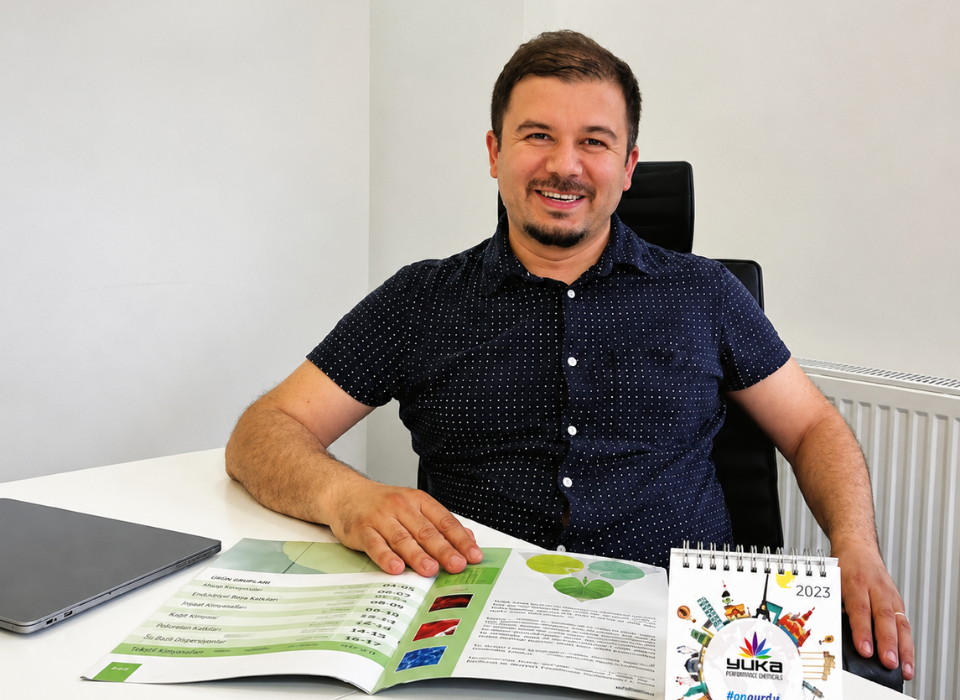
Interview with Samim Saner, Chairman of the Food Safety Association
We spoke with the President of the Food Safety Association, Samim Saner, about the concept of food safety. We conducted a pleasant interview for you, particularly addressing developments that will occur in the food sector in the coming years and the points where sensitivity should be shown in order to further advance the sector.
Mr. Saner, could you tell us about yourself and your professional background?
After completing undergraduate, graduate and doctoral education in Chemical Engineering, Biochemistry and Environmental Sciences at Istanbul Technical University, Vienna University of Technology and Boğaziçi University, and obtaining a Food Hygiene diploma from the Royal Institute of Public Health, I took part in establishing the operations of Quality System Laboratories (KSL) and S&Q Mart in Turkey in 1991 and served as General Manager of the Quality System Group's Mérieux NutriSciences Holding until 2017. As of January 2017, I have been serving as Scientific Director responsible for 25 countries in the international operations of the Mérieux NutriSciences group. I actively serve in various international professional organizations such as EHEDG, IAFP and AOAC Europe. I have also been serving as President of the Food Safety Association for 15 years and teaching part-time at the Chemistry Department of Boğaziçi University.Could you provide information to our readers about the Food Safety Association? How do you interpret the importance of the services you provide to the food industry in Turkey in terms of the sector and the country?
The Food Safety Association was founded in 2003 to bring together all stakeholders related to food safety under the common denominator of food safety and to create public and sectoral awareness on food safety. Within this scope, we conduct many activities aimed at both consumers and the sector. The most important of these activities is the International Food Safety Congress that we have been organizing since 2009. We are currently continuing preparations for the seventh congress, which will be held on 4-5 June 2020 at the Grand Cevahir Hotel. The main objective of our international-status congress is to bring together all professional groups and various stakeholders related to food safety under the congress umbrella to create a collective wisdom, and to contribute to the development of food safety practices in the food industry by sharing scientific, technical and regulatory innovations on food safety. Much misleading information reaches consumers regarding food safety. This both misleads consumers and causes changes in their priorities regarding food safety, and negatively affects organizations that do their work correctly in the development of our country. In this context, we maintain regular information activities through the media and social media on one hand, and on the other hand, believing that the media should be encouraged towards evidence-based and scientifically accurate reporting, we started awarding the Food Safety Association Media Awards in May 2017. Food-related news is carefully reviewed in written press, TV, internet and news agency categories, and after preliminary screening, it is evaluated by a 9-member jury composed of journalists and academics. In the award ceremony attended by many valuable journalists, academics and sector representatives from the media world and the academic world, we had the opportunity to thank press members who conduct correct reporting based on scientific evidence by awarding 19 awards in 4 categories. The Food Safety Magazine, which has been in publication since 2007 and addresses food safety issues in all aspects, is the only magazine in our country whose main subject is food safety. Based on our mission, we try to share news on food safety, scientific and technical developments, and facts with the media and the public to the best of our ability.How do you define the concept of food safety? What measures need to be taken for the development of the food safety concept?
"Food safety" is a scientific discipline that ensures that food is produced in a way that controls physical, chemical and biological risks during the processes from the farm to the consumer at the table, and does not harm the health of the consumer. The most important principle of food safety is prevention; problems must be prevented before they arise. All food safety management systems, especially HACCP, are based on this main principle. Another important principle is traceability. When a situation arises that poses a risk to human health in food, it is extremely important to know which stage it originates from and, where appropriate, which supplier. Therefore, ensuring traceability is a legal requirement. Wherever you are in the chain, you must keep good records of at least one step backward and one step forward, and conduct good controls and inspections. The state's monitoring of food safety through both the regulations it establishes and its controls forms the legal aspect of the food safety system and the basic rules originate from here. However, in fact, one of the most important roles in food safety falls on the consumer. If the consumer does not demand "safe food," there is no way to achieve progress. Therefore, creating and promoting food safety awareness in society is a key issue.What projects have you undertaken? What factors do you consider when determining projects?
We have had many projects so far and have also participated in various EU-funded projects. Our newest project as the Food Safety Association is the "Food Loss and Label Reading Research" that we are conducting. As the Food Safety Association, we attach great importance to the issue of food losses, because significant food loss can be prevented through correct food safety practices and correct food safety technologies. Our research focuses on food waste due to unconscious consumption habits; in other words, "food loss." Food loss not only causes high levels of cost and resource losses globally today; it is predicted that it may reach a much larger scale over time as the population increases. It is known that 1/3 of all food produced globally is wasted and the value of wasted food reaches 1.3 trillion dollars annually.1/3 of all food produced globally is wasted
The waste rate is expected to reach 40% in 2020. Globally, in industrialized societies, the sources of losses have been identified as: 17% in the supply chain, 5% in retail, 17% in restaurants, hotels and similar mass consumption places, and 61% in homes. According to these rates, it appears that the cause of losses is most related to consumer attitudes and behavior patterns. With our research, we aimed to shed light on the general food shopping habits of consumers in different demographic groups in Turkey, food consumption in the home and in restaurants, and decisions to discard food. According to our research results, in parallel with our 3 main objectives, we had findings under 3 main groups: food shopping and label reading habits, the extent of food loss, and consumer approaches to ideas for reducing food loss. Through these findings, we determined the current extent of food waste, the level of consumer awareness regarding waste, and our strategies and action plans on how to prevent waste. With the provision of this information for use, our research has served as a guide for us to implement actions towards cooperation between consumers, food suppliers/producers, and the ministry. For example, we are in the process of preparing a consumer guide aimed at creating awareness about the differences between the expiration date and the recommended consumption date, food preservation, and conscious food consumption for consumers. At the same time, we will have a guide for producers and comprehensive training on "shelf life and packaging." I would also like to share that this research of ours was awarded the Social Owl Bronze Award by the Turkish Researchers Association.What innovations will occur in the food sector in the coming years? How will these innovations affect Turkey and the world?
Considering current consumption dynamics, it is predicted that the world population will increase by 29% by 2050, rising from 7.6 billion to 9.8 billion, but protein demand will increase by 78%. Protein supply challenges will definitely occur. On the other hand, it is certain that the number of vegan populations will also increase. Therefore, in meeting protein sources, due to various reasons such as excessive water consumption in animal husbandry, greenhouse gas emissions and consumer pressure, especially in developed countries, animal husbandry is expected to lose weight, and innovative biotechnological sources such as insects, microalgae, plant-based protein sources, and cellular protein, synthetic meat are predicted to be used as protein sources. An important innovation that is rapidly spreading in the United States and Europe is in the field of nutrition. Incredible developments in mapping the human genome have led to new perspectives emerging first in health and now in nutrition. The effects of diet on genes (nutrigenomics) and the different reactions people have to nutrients based on their genetic makeup (nutrigenetics) have opened the doors to the concept of personalized nutrition. In this direction, the importance of the individual's gut microbiota in personal nutrition is becoming increasingly prominent. In the coming years, we will eat according to our genome and through our smartphones we will learn what to eat and how much to eat, and we will have nutrition plans accordingly; we will be able to observe the nutritional values and deviations of what we eat. Based on all of this, our phones will alert us. Another important area of innovation is related to transparency, traceability and innovative technologies in this regard. Globalization and the complexity of supply chains have led to increased serious food safety problems and the proliferation of food fraud. We are experiencing a period in which many food producers do not know their suppliers' suppliers. This is an increasingly growing problem. New technologies will be used so that consumers can transparently see production and farm conditions from farm to fork and to ensure product traceability. Another important development is the creation of fingerprints of products on a metabolic basis through untargeted analysis technologies (non-targeted screening) and, in particular, the understanding of raw material input controls with a single test that can measure both food safety and food adulteration. What I am describing is coming rapidly; we must be prepared.In which areas should the sector show sensitivity in order to further advance the food sector?
Among the issues the food sector should be sensitive to is the global trust crisis consumers are experiencing regarding food products. Unfortunately, I have foreign data; 77% of French people, 55% of Americans and 91% of Chinese people think that the food they consume may be harmful to their health. I believe the data in our country is close to these values. Parallel to this trust crisis, consumers want transparency regarding the products they consume. Many food producers implement open-door policies and continuously open their factory doors to interested consumers. I believe that tours using virtual reality technology developed for this purpose will become more widespread. Another important development towards the restoration of consumer confidence is the increasing prevalence of some smartphone applications that provide all the details consumers want to know about the product. Some producers, through smartphone applications they have developed, enable consumers to scan QR codes on product packaging with their smartphones and see the entire supply chain, contents, nutritional values and possible allergens of the product through augmented reality applications.Production above European standards
It is known that some retail chains in the United States and Europe are increasingly using blockchain technology in the traceability of their products. Consumers, using blockchain technology, can see the contents of feed eaten by a chicken they purchased, the farm where it was produced, the slaughterhouse where it was processed, and the analysis results for the product and similar various details. Apart from this, a very fundamental problem specific to our country is that there are production facilities in our country operating at very different levels in terms of food safety. On one hand, there are organizations producing above European standards; on the other hand, unfortunately, there are also many facilities referred to as backstreet operations. Consequently, it is possible to find products with very different food safety levels at the same time in the market. This situation damages the value of Turkish products and the Turkish brand both in the domestic market and in foreign markets. If you look at successful international brand examples in the food sector, you will see that all of these examples are based on high levels of food safety and quality. A product with reliability and quality variability issues has no place in international markets. Therefore, firms' investments in food safety and quality on the path to branding should be officially supported. These supports will be as beneficial to product safety and quality improvement in the domestic market as they are in foreign markets. Many EU countries have effective official support programs on this matter. Another issue the sector should focus on is developing innovative products and innovative packaging materials according to changing consumer expectations.Advertisement
Ad Space728 × 90