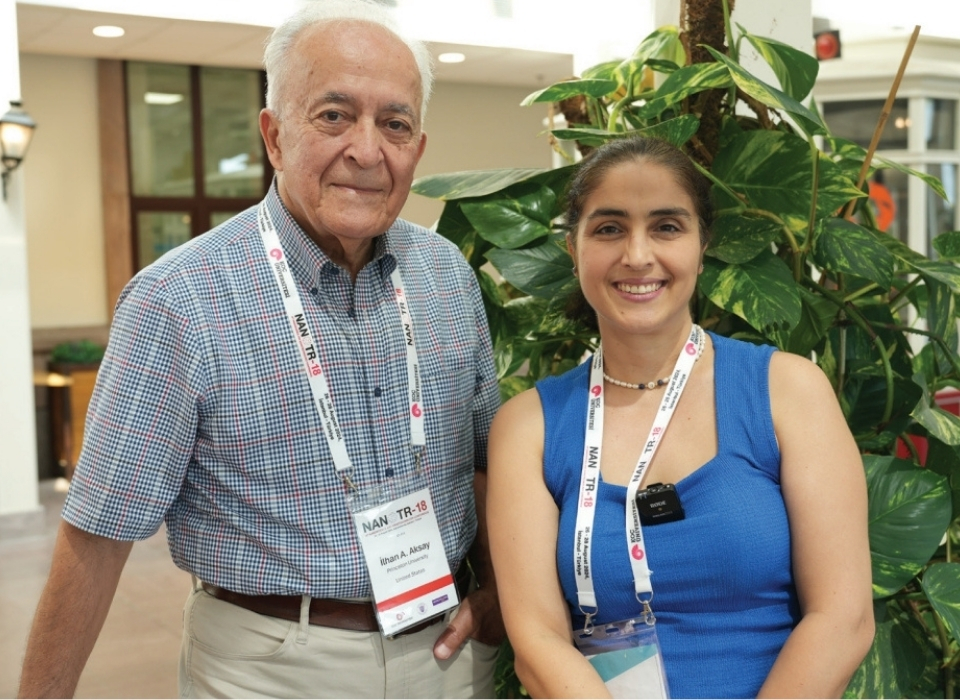
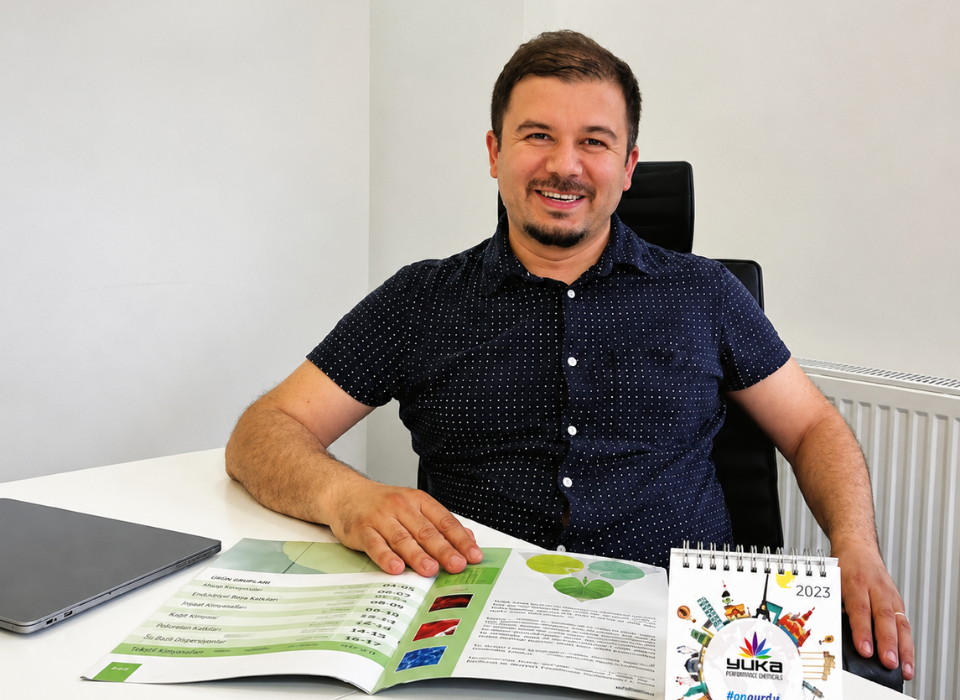
We were excited to meet one of the names we hoped to interview at the NanoTR Conference, held for the 18th time this year at Koç University: İlhan A. Aksay, professor of Chemical and Biological Engineering at Princeton University. Aksay, whose journey began in Turkey and continued at the world's most prestigious universities before reaching Princeton University, made an excellent start for our "Distinguished Academics" series. We spoke with Prof. Dr. İlhan A. Aksay about his life spent in the light of science and what scientific developments await us in the future.
Ilhan Bey, there is much information available on the internet about your academic life. But I am curious about your childhood, what kind of family you grew up in, for example, your primary school years.
I was born and grew up in Paşabahçe neighborhood of Beykoz, Istanbul, in a small house. I grew up in a very peaceful family life with my two sisters, six and eight years older than me, along with my mother and father. The only communication device in the house was a small radio. My responsibilities included looking after chicks and chickens in the back garden of the house, buying fish from fishermen on the shore, having the fish cleaned at the butcher shop and then having it cooked in the oven, and buying bread from the same oven during Ramadan. I also played ball in the streets. My children and grandchildren, having never seen such a life, were curious about the place where I was born and grew up. In June, I went there with them and found the house where I was born. We spoke with the people living in it. This gave my own family the opportunity to see this house too. I attended Paşabahçe Primary School. I never forget my primary school teacher İhsan Hakçıgil.
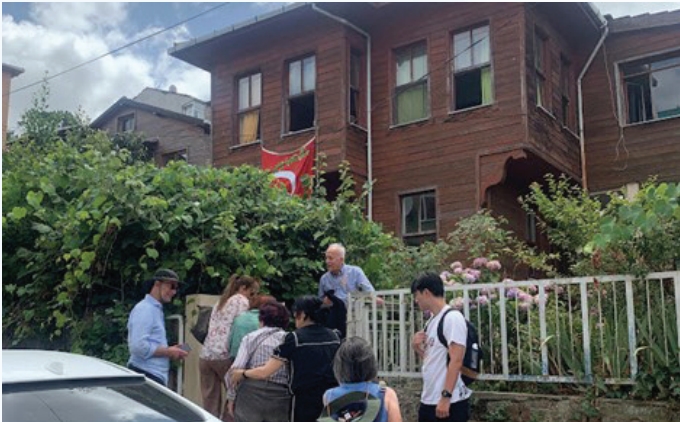
Visit to birthplace in Beykoz Paşabahçe with family in June 2024.
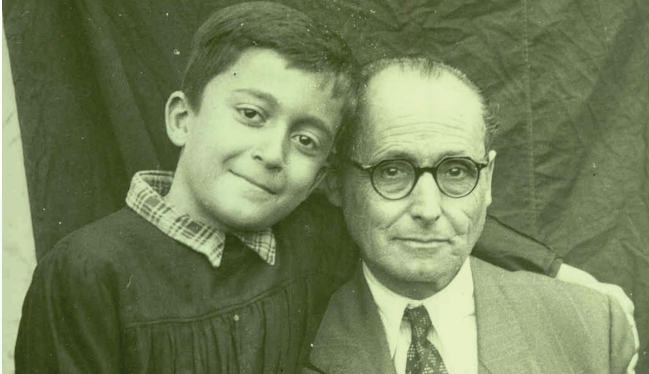
With primary school teacher İhsan Hakçıgil
He was a very knowledgeable person who saw ahead. He gave each student very sound advice tailored to their abilities, saying "you do this, you do that." My passion for science began in this primary school where I studied for 5 years.
How did your subsequent education develop?
After primary school, since there was no middle school in Paşabahçe, I went to Beykoz Middle School. Until 7th grade, I was a good student but not the top of my class. In 7th grade, I became seriously ill. I could not go to school and obtained a medical certificate. They could not determine what the illness was at the time. They said appendicitis, then the beginning of tuberculosis, then colitis, and I lost a year in my education. What that illness was, the whole world knows now: Familial Mediterranean Fever (FMF).
How did this one-year break affect your life?
Very significantly. Living with this disease was my only option and still is. When I returned to school a year later and saw my classmates in the grade above mine, it affected me deeply. By the end of that year when I finished school, if I am not mistaken, all my grades were 10. I still wonder why that one-year break and living with FMF drove me so hard. With that drive, I continued my education with constant success. At Vefa High School, I was among the first scholarship students living at the school.
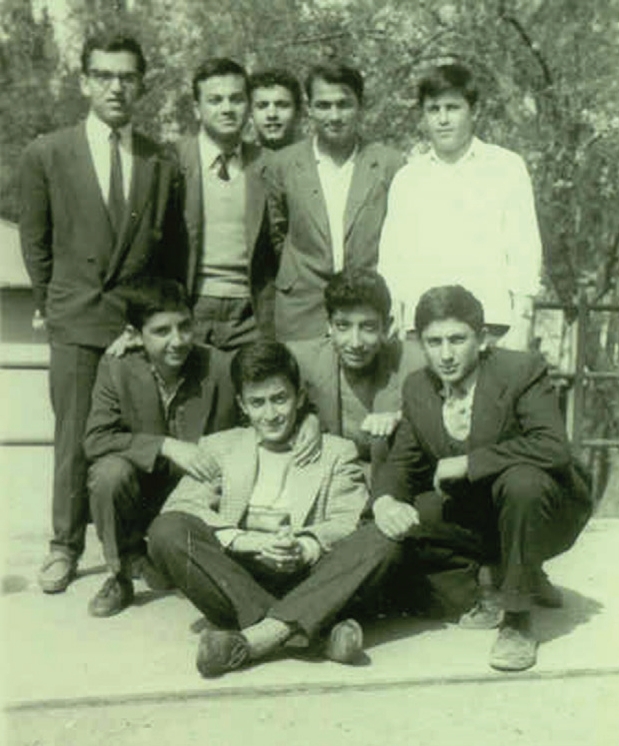
One of the schools that affected me the most was this one. At Vefa High School, in the scholarship student group, exceptionally talented students were selected from all over Turkey. A few people from Istanbul and the rest were all from Anatolia. The Turkey I was trying to learn about from geography lessons had come to Vefa High School.
How was your education at Vefa High School?
I was successful at Vefa High School too. Our teachers were very knowledgeable and talented. No matter what you do, it was very difficult to please them. I came second in the Istanbul Technical University entrance exams by 3 points. My mathematics teacher, Hayret Özmutlu, was angry with me for coming in second. I knew he cared for me and understood why he seemed angry. This characteristic of Hayret Bey's passed on to me too. I often got angry with my own students for not doing better.
You succeed but then you don't know what to do next. You want to do science but you don't know how to do it. The exams I took defined my future. I studied civil engineering at Istanbul Technical University for two weeks. By the end of the second week, I received positive responses from two of the exams I had taken earlier to study abroad with a scholarship. One was Mining Engineering in Germany, and the other was Ceramic Engineering in America. It was the era of John F. Kennedy in the United States and we all admired Kennedy back then. With that admiration, I made my choice in favor of America. I went to the United States with a scholarship from Sümerbank.
Could you tell us a bit about your education in America?
I studied Ceramic Engineering at the University of Washington in Seattle and graduated with honors. However, I also took the most challenging courses from the Chemical Engineering Department. I saw the benefit of this in my later choices, especially when I joined the Chemical Engineering Department at Princeton University. After Seattle, I moved to the University of California, Berkeley and did good work in materials science. Then I worked at Xerox for two years and paid my debt to Sümerbank. Sümerbank had not allowed me to pursue a doctorate or become a faculty member. They were right. For this reason, I first paid my debt, and then returned to my country and started working as a faculty member at Middle East Technical University in 1975. The next 5 years were perhaps some of Turkey's worst years. There were coups, I saw killings, I saw fights between people jealous of each other. With my wife and 2 children, we realized this would not work and returned to America. For me, this return is a memory I still recall with sadness.
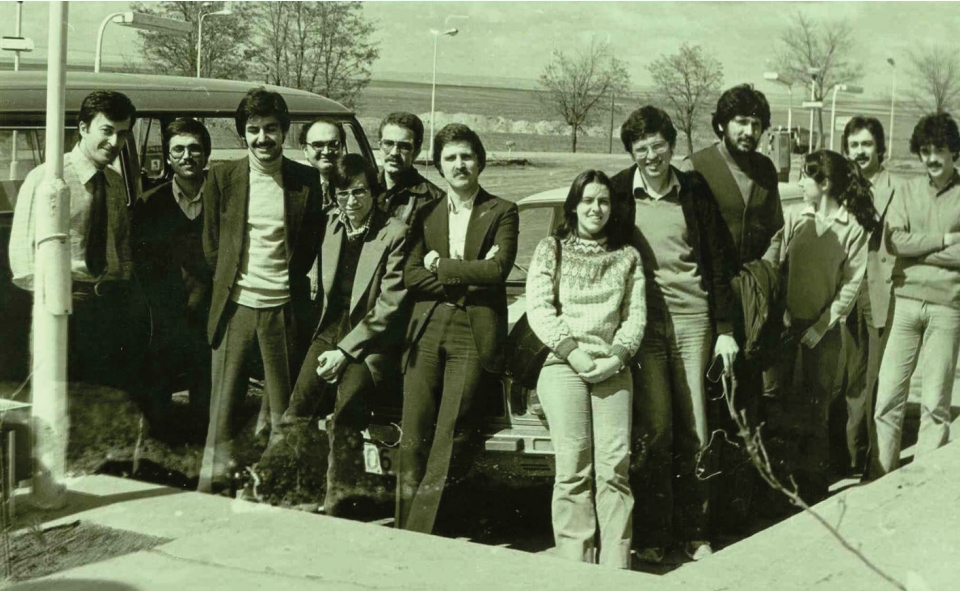
During a visit to Çanakkale Ceramic Factories during METU years.
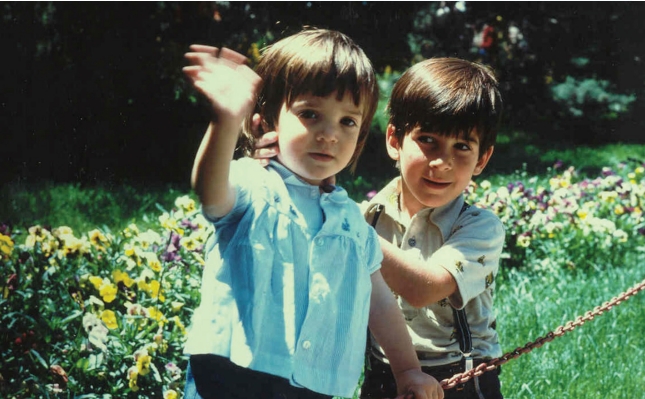
Children, Eve and Emre Aksay during METU years (1975-80).
How did your career develop after you returned to America?
After returning to America, I first spent 2 years at the University of California, Los Angeles, and then 9 years as faculty at the University of Washington in Seattle, where I had been a student. Since 1992, I have been in the Chemical and Biological Engineering Department at Princeton University and I continue to work there as emeritus. Difficult as it may be, if you work with conviction, difficulties can be overcome. There are many examples of this. While working with such dedication, how did you balance academic life with personal life? That is not too difficult either. First, your spouse and children need to understand you. This is difficult but possible. In my opinion, for this reason, my son, Emre, became a scientist. My daughter, Eve, became an elementary school teacher. I lost my first wife, to whom I was married during my student years, to cancer at a young age. It was a very devastating period. During those years I was at Koç University. Family love and love of science are the strongest factors that sustain people in life, increase their resilience. If you have competence, being a scientist, being a teacher is perhaps one of the easiest things people can do with love and peace of mind. The reason it is easy is this: you don't need to lie to succeed. You try to learn the realities of nature. A person who cannot find the realities, or even if they find them cannot understand them, cannot do science. Cannot understand what nature is.
When we examine your work, we see that you are greatly inspired by nature....
When Sümerbank gave me the task of becoming a ceramic engineer, the first thing I did was learn what ceramic engineering was. I was eighteen years old. My knowledge was limited. I had learned mathematics, physics, and chemistry well in high school. I had not even taken biology. As an academic soldier, I went and did my duty. However, learning never stops. Then I realized that the ceramic engineering I learned and taught is far behind the biological ceramic engineering that nature does. Nature produces our bones as ceramics, produces our teeth as ceramics. Some bacteria (magnetotactic bacteria) produce magnetic ceramic crystals at nanometer scales. In the last 30-40 years, books have been written on such examples. Leading biologists called on materials scientists to help. Very few answered this call. Nature does the most perfect design of many materials we need. I explained a very simple example in Science 273 (1996). 28 years have passed since then. This example and many similar examples have not yet been made. We couldn't do it either. Some people claimed they did. No, they didn't. We still cannot do biological ceramic engineering, we understand very little of it. This is why I am inspired by nature.
Some of the materials that are the subject of speakers at the NanoTR-18 meeting at Koç University are made by nature with superior properties. For example, if you want to increase the fracture toughness of ceramics, it is very important to first know that the fracture resistance of our bones approaches 2000 J/m2. When the fracture resistance of ceramics we produce reaches 20 J/m2, we consider it a great success. We are not ten, not a hundred, but a thousand times behind. We need to tell our students this and ask them what the future might be. The future is this.
In your opinion, what is the next major development both in the scientific world and in the field in which you work?
In my opinion, the development of material systems will be in the direction of resembling biological systems. The universe is a formation approximately 14 billion years old.
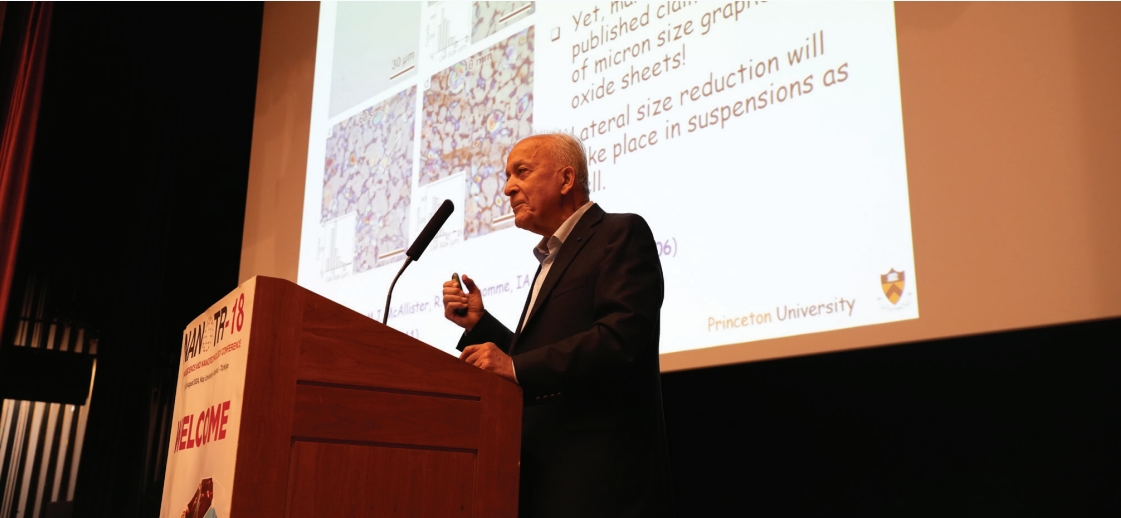
We start with the Big Bang. We also know there are other planets. We don't need to go that far. There is much we can learn from nature's material production methods for materials design and production. We ourselves are living materials. Trees are too. I gave bones and teeth as examples above. The science we do is a very small part of this material production that nature does. Just because nature does it and knows how, we shouldn't stop. Understanding how nature does what it does will move us forward. Many of the talks at the NanoTR-18 Conference were like that. Doing and understanding such work diligently are the most valuable paths we will follow. In the end, it is difficult to know what the details will be; but countries that walk at the forefront of science, in my opinion, will be the most advanced countries, and will continue to be.
What do you recommend to young scientists and aspiring scientists who are pursuing this path, drawing from all these experiences?
I always say that if there had been no Atatürk, there would be no me. Atatürk placed great importance on education and science. I recommend that those who are going to pursue this path first undergo good education. Physics, chemistry, mathematics, engineering, and biology; we need to teach these disciplines in depth to our students. If they learn these and start applying them themselves, they will answer a small portion of my questions as I do. Science is questioning, learning new realities, applying, and explaining these realities. Without science, without questioning, you cannot develop. No state and no society can develop without science and questioning. Development will only happen through science.
Interview by: Gamze Ünal
Images by: Oğuzhan Dağıstanlı
Gallery