Turkey Takes First Step Toward Treatment of Rare Genetic Disease Through Brain Organoid Research

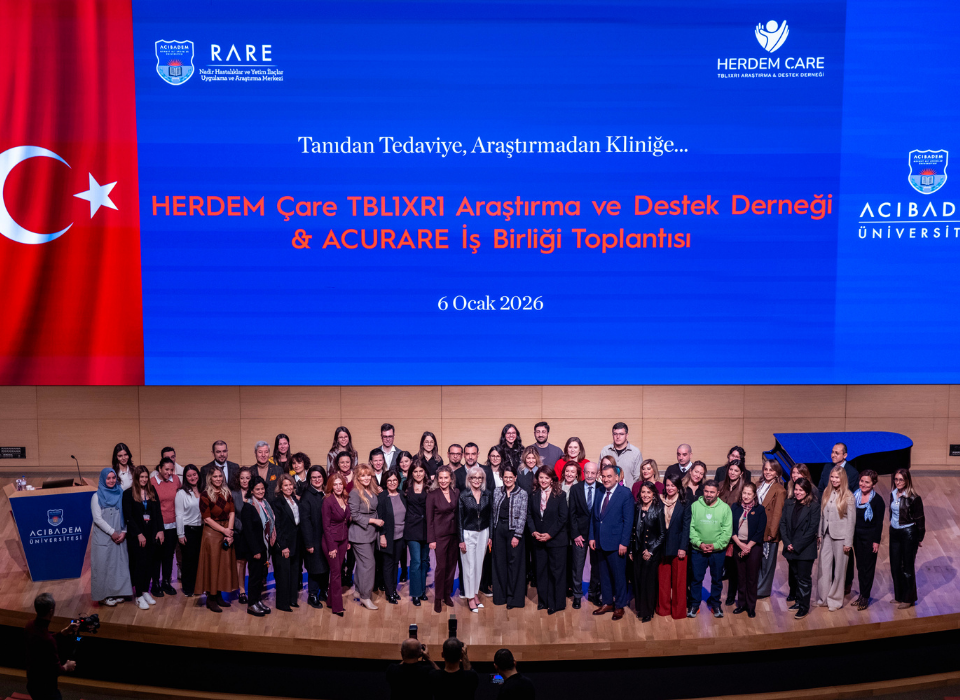
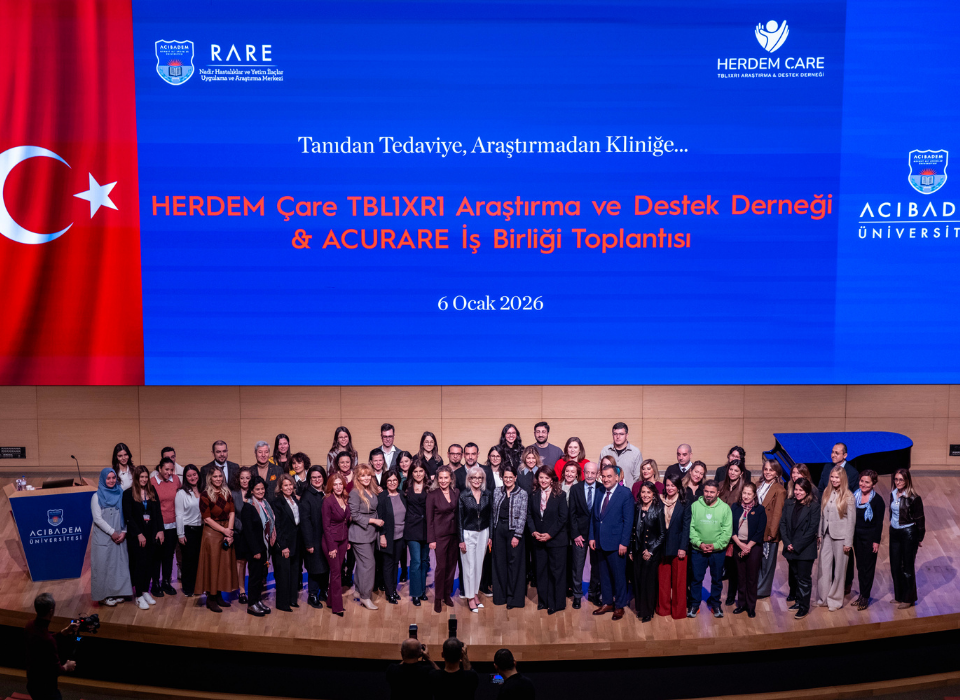
A significant scientific collaboration has been launched to develop treatment for TBL1XR1-associated neurodevelopmental disorder, a rare genetic disease in Türkiye. In the project carried out by Acıbadem University, Altınbaş University and HERDEM Çare Derneği, a brain organoid will be produced in Türkiye for the first time in order to study the disease at the cellular level.
A significant scientific collaboration has been launched to develop treatments for TBL1XR1-related neurodevelopmental disorder, a rare genetic disease rarely seen in Turkey. In the project conducted by Acıbadem University, Altınbaş University and HERDEM Care Association, brain organoids will be produced for the first time in Turkey to examine the disease at the cellular level.
Mutations in the TBL1XR1 gene are reported to be associated with neurodevelopmental problems including learning difficulties, epilepsy and autism spectrum disorder.
New Model for Rare Diseases Affecting 300 Million People
Speaking at a conference held at Acıbadem University, ACURARE Director and Pediatric Genetic Diseases Specialist Prof. Dr. Yasemin Alanay emphasized the importance of public awareness of rare diseases and shared the following information:
"Today, there are thought to be more than 6,000 rare diseases in the world, and approximately 300 million people live with these diseases in total. In Turkey, this number corresponds to 5–6 million people. The vast majority of rare diseases stem from single gene mutations. TBL1XR1 falls into this category and is often confused with autism or epilepsy."
Alanay emphasized that while genetic diagnostic capabilities are advanced in Turkey, treatment options remain limited, stating that only 5% of rare genetic diseases have treatments available.
From Patient Cells to "Mini Brain": New Hope for Treatment with Brain Organoids
Within the scope of the project, "mini brain" models will be produced in a laboratory setting from cells taken from patients. Assoc. Prof. Dr. Kaya Bilgüvar, Head of the Medical Genetics Department at Acıbadem University, noted that this technology will guide research and summarized the advantages of the method as follows:
"Thanks to brain organoids, it is possible to work on a model carrying the patient's own genetic structure without the need for animal experiments. This method allows us to understand where and how the disease manifests in the brain, and opens the way for genetic correction and personalized treatment approaches."
Bilgüvar also stated that their goal is to investigate whether they can reverse cellular damage using gene editing techniques.
Solidarity and Awareness Step for Patients
HERDEM Care Association, which undertakes the civil aspect of the project, brings together families diagnosed with TBL1XR1 throughout Turkey. Association President Dr. Ayşegül Altınbaş noted that their experience through the diagnostic process led to the establishment of the association, saying:
"We waited for a diagnosis for eight years. When we received the diagnosis, the question 'What will we do now?' came before us. The more patients come together, the more data is created for science. Today we have reached more than 13 families and we see that we are not alone."
Need for Legal Framework for Genetic Data
Health law expert Prof. Dr. Tekin Memiş noted that genetic data is important for scientific research but also contains individual rights, issuing the following warning:
"An open legal framework is needed for the protection of genetic data and the conduct of research in an ethical manner. These regulations are of critical importance for the development of new treatments."
"Getting a Diagnosis is the First Step on the Road to Treatment"
Aykut Çekiç, whose daughter has a TBL1XR1 mutation, touched on the importance of awareness in rare diseases and described the diagnostic process as follows:
"Our eight-year-old daughter underwent three brain surgeries. Finally, a diagnosis could be made and this is a great hope for us. Because if a disease can be diagnosed, one day its treatment can also be found."
Scientific Impact of the Study
According to experts, the study being conducted will not only enable understanding of TBL1XR1 but may also make it possible to solve the biological mechanisms of autism, epilepsy and other neurodevelopmental disorders.
Gallery