Aegean Exporters' Associations to Boost Agricultural Exports with Circular Value-Added Approach
Ege İhracatçı Birlikleri, which accounts for 75 percent of Turkey's organic product exports, is investing in numerous projects in line with the European Union (EU) Green Deal perspective through academic collaboration, contributing to low-carbon growth in the agricultural sector.
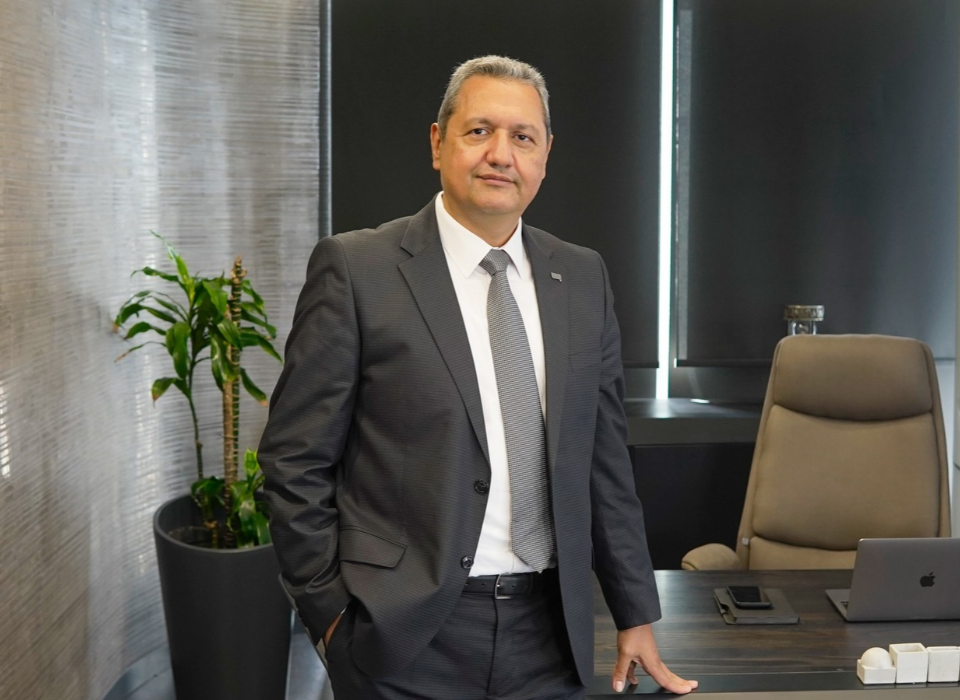
Birol Celep, Deputy Coordinator Chairman of Ege İhracatçı Birlikleri and Chairman of Dried Fruits and Products Exporters Association, spoke at the 1st Turkey Farmers Summit held under the auspices of the Ministry of Agriculture and Forestry, during the "Sustainable Agriculture" panel moderated by Feride Cem, Economics Writer at Sabah Newspaper.
Birol Celep, Deputy Coordinator Chairman of Ege İhracatçı Birlikleri and Chairman of Dried Fruits and Products Exporters Association, stated that they have included in their internal strategy development work the export of products with less carbon footprint and participation at every stage of production: "We are striving to lead the way in showing the whole world that the Aegean Region is a centre of sustainable production.
Polarization between those embracing change and those resisting it in our world is the most prevalent contradiction of our era. Common challenges such as climate change, water crisis and inequality are eroding the foundations of our societies and economies. At this point we have reached, the concept of "development" or alternative development models must be questioned in a far more radical manner than before. The decarbonisation process that will take place within the scope of the EU Green Deal is our priority area," he said.
Celep recalled that the first binding climate law was approved by the European Parliament recently, and that the final regulations regarding the carbon border adjustment mechanism would be announced shortly.
"We have a trade volume of USD 143 billion with the European Union and are an important supplier country in many sectors. When considering the possible effects of the regulation, the calculations made show that the carbon cost for our country could reach USD 1.8 billion. We are talking about a process ranging from input industries to farms, from farms to processors and packers, logistics and consumers, where waste minimisation and recovery maximisation reach their peak. For our country, which has Europe's largest agricultural economy and is among the world's top 10 producers in more than 50 products; "sustainable agriculture" will enable us to take the forefront in the circular value-added flow."Target of USD 5.5 Billion in Agricultural Product Exports
Birol Celep noted that Ege İhracatçı Birlikleri holds a leading position in Turkey in the exports of aquatic products, olives and olive oil, seedless raisins, dried figs, table grapes, chestnuts, fruit and vegetable products, spices and non-wood forest products: "In the first five months of 2021, our agricultural sectors realised exports of USD 2 billion and 21 million. Of every USD 100 of exports recorded by EİB, USD 33 came from agricultural products. By placing emphasis on our sustainability work, we aim to increase our agricultural product exports to USD 5.5 billion in 2021," he said. While moving towards this goal, Celep pointed out that the water footprint is especially at the forefront of the most important issues to be monitored for the agricultural sector, noting that 77 percent of the world's clean water resources are used in agricultural production and summarising the key points that need emphasis as follows: "Using water efficiently with modern irrigation techniques, correct planting planning with basin-based production models, not polluting water with good waste management, ensuring recycling and carbon circulation, controlled use of pesticides and fertiliser, preventing damage, land consolidation for controlled water and production, water harvesting to protect reserves, cooperation with academia and raising farmer awareness, widespread use of renewable energy sources, integration of high-tech solutions," he said.Birol Celep holds the view that in a global knowledge economy, every country needs the capacity to absorb technologies and adapt them to its own needs for development.
"Due to more data being available in the supply chain and with customers, there is more comparison regarding product performance and power inevitably shifts to consumers over time. It is now a prerequisite that companies disclose their access, traceability and efficiency levels. Because information from the supply chain must be transparent. Therefore, we must use digital solutions. As a result, "data" improves products and the supply chain. This is why we support our companies with our Sustainable UR-GE projects to accelerate the transition of both our industrial and agricultural sectors to environmentally friendly and low-carbon development." Emphasising the critical importance of creating financial resources that sectors will need for new production technologies and digitalisation, according to Celep, international certificates and documents that could be requested in this area should be included in the scope of support, and technical advisory needs should be met. "State support can be addressed with a new opening from the EU Green Deal perspective that will also cover our SMEs. At this point, mechanisms should be developed where water policies will be measured and evaluated at the highest level, reporting, carbon footprint information and labelling initiatives will be put forward. Contribution should be made to directing investments to clean technology and especially precision agriculture applications, and R&D resources should be increased."Asia-Pacific's Sustainability Drive
Birol Celep stated that Asia-Pacific will show significant developments in precision agriculture in a short time; pointing out that various government programmes are being carried out in countries such as India, Sri Lanka and Nigeria to promote the use of precision agriculture technology, "At the same time, forest carbon conversion should be increased through land greening and afforestation work, and projects related to water resources should be increased. China, the world's second largest economy and one of the leading carbon emitters, is the world leader in increasing forest and tree resources. Between 2000 and 2017, it alone accounted for one-quarter of newly created green areas," he said. Celep believes that in the face of global problems, global solutions can be produced through cooperation that ensures the participation of young generations as much as leaders from the business world, government, civil society and academic circles. "Today consumers are no longer on autopilot. They have quite high sensitivity regarding the contributions companies and brands make to nature and society. Especially the majority of younger generations; 57 percent of Generation Y and 59 percent of Generation Z, which is on its way to becoming the largest consumer generation, buy recycled products. It is now inevitable to appeal to the liquid human-liquid society segment formed by ecological awareness and ethical questioning. The spread of vegan and organic options is an example of this liquidity." Describing how EİB declared 2020 as the "Year of Sustainability," Celep said, "First, our Sustainability Committee prepared a "Sustainability Manifesto." We accept our Manifesto as a strategy document in this field and structure our activities within this framework. We launched a zero waste project within our Association and obtained a zero waste certificate. We became the first Exporters Association from Turkey to become a member of Global Compact, a United Nations initiative. We organised an education programme under the title EİB Sustainability Days to inform our companies, and we are planning more comprehensive training programmes for the coming period," he said.We Know the Pesticides We Use
Birol Celep recalled that the EU's Green Deal aims to reduce pesticide use by 50 percent, fertiliser use by 20 percent and antimicrobial use by 50 percent by 2030, and spoke as follows: "In our country, within the framework of EU harmonisation, a total of 213 active substances used in agricultural production were banned in recent years, and the use of 11 active substances was also restricted. Within the scope of our "We Know the Pesticides We Use" project, we have our products analysed in accredited laboratories. The European Union aims to transition to organic farming in 25 percent of the total sown area. Given that 75 percent of Turkey's organic product exports are realised from our region; as the organic sector, we have initiated our efforts by applying for two projects under the Green Deal and Climate Change headings."Celep added that they keep the Green Deal as a main item on their agenda and work to contribute to increasing the competencies of members with a sustainable export perspective.
"Our Sustainable Food Production and Climate Change Adaptation Project, in cooperation with academia, includes education and awareness-raising activities in which sustainability in the value chain and water use efficiency are demonstrated. Our other project is in the field of Sustainable Agricultural Practices, led by academia with our Association as a partner, and will be implemented with the participation of 29 institutions from 10 different countries." At the Farmers Summit, Aylin Çağlayan Özcan, General Director of EU and Foreign Relations at the Ministry of Agriculture and Forestry, Ebru Baybara Demir, Chef and Social Entrepreneur, Emrah İnce, General Director of Tekfen Agriculture, Murat Hocalar, CEO of Aynes Food and Serpil Günal, General Director of TARSİM also shared their views and projects on sustainable agriculture practices.Advertisement
Ad Space728 × 90