Food Waste Compost Alone Less Effective Than Potting Soil, Study Finds

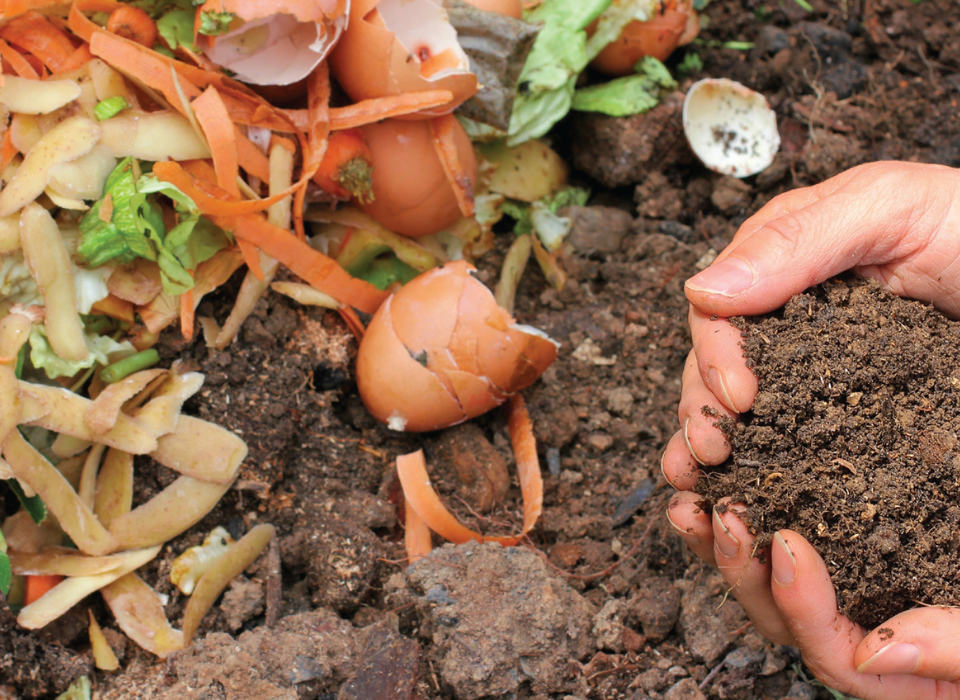
According to the U.S. Food and Drug Administration, an estimated 30–40% of the food supply in the United States goes to waste. Food science and horticulture experts came together to examine whether this could form a basis for growing the next batch of crops.
According to the U.S. Food and Drug Administration, an estimated 30–40% of the United States' food supply goes to waste. Food science and horticulture experts have come together to examine whether this could form a foundation for growing the next crop.
Matt Bertucci, assistant professor in sustainable fruit and vegetable production at the University of Arkansas System Division of Agriculture, said, "This work is about capturing food waste that would otherwise go to a landfill, generate greenhouse gas, and somehow harm the environment." "Instead, we're evaluating it to create an organic growing medium—an organic amendment/compost that could be used in seedling production," he added. Bertucci is part of the horticulture division within the Arkansas Agricultural Experiment Station and Cooperative Extension Service, the research and extension units of the Division of Agriculture, and the Dale Bumpers College of Agricultural, Food and Life Sciences at the University of Arkansas. The study, titled "Assessing Food Waste Compost as a Substrate Amendment for Tomato and Watermelon Seedlings," was published in HortTechnology journal.
Researchers grew tomato and watermelon seedlings in the following media to compare seedling germination, growth, and nutrient uptake: growing medium made solely of food waste, solely commercial peat moss-based potting soil, and mixtures of the two in different ratios. The medium containing pure food waste was made from food scraps provided by a commercial partner and wood chips obtained from a tree services company. The study found that food waste compost may not be suitable as a standalone alternative to commercial potting soil, but could be used as part of a mixture. Results showed that mixtures containing food waste compost below 50% provided better seedling emergence and growth; they had better biomass accumulation compared to the pure food waste medium. Biomass accumulation is considered an important indicator of plant health and potential yield. Nevertheless, Bertucci emphasized the value of composting food waste, noting that it prevented waste from going to a landfill and provided a usable byproduct.
"Compost is the best option from a sustainability standpoint," he said. Co-authors included former graduate student Allyson Hamilton and Professor Kristen Gibson from the food science division; department chair Mary Savin, program assistant D.E. Kirkpatrick, and graduate student R.C. Woody-Pumford from the horticulture division.
Gibson is a food safety and microbiology professor, holder of the Donald "Buddy" Wray Endowed Chair in Food Safety, and director of the Arkansas Center for Food Safety affiliated with the experiment station. Savin is a professor and department chair in horticulture.
Source - Allyson N. Hamilton et al, Assessing Food Waste Compost as a Substrate Amendment for Tomato and Watermelon Seedlings, HortTechnology (2025). DOI: 10.21273/horttech05559-24/ Journal information: HortTechnology / https://phys.org/news/2026-01-food-compost-effective-potting.html
Gallery