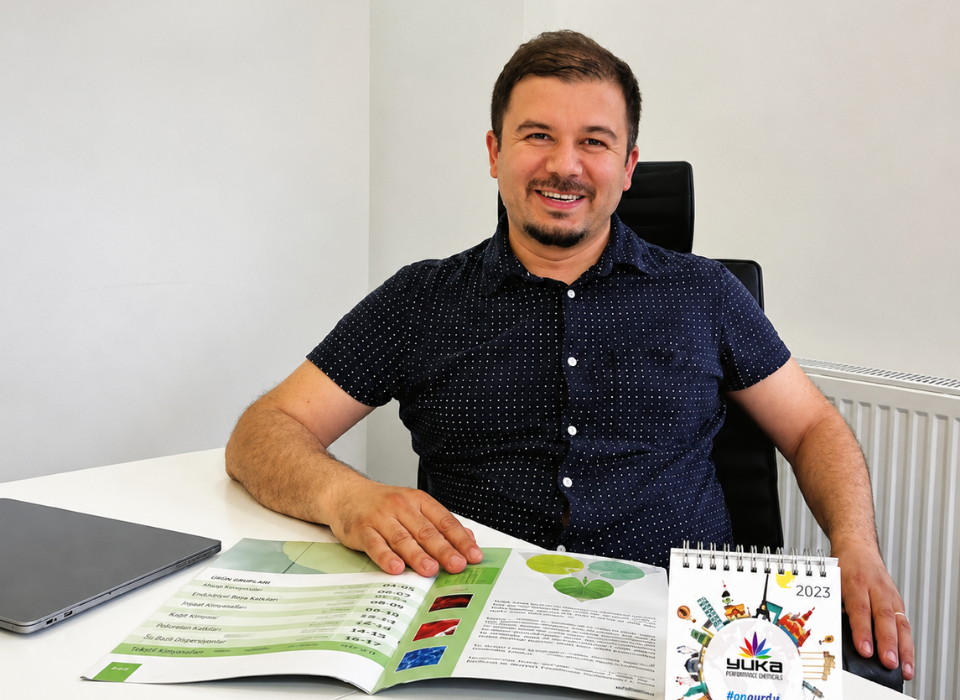
Interview with Nail Egemen Yerce, Founder of Yerce Mimarlık
We conducted an enjoyable interview with Nail Egemen Yerce, Founder of Yerce Architecture. Yerce provided information about the design processes in the projects they have completed.
Could you briefly tell our readers about yourself, your education and professional background?
I can say that I started my architecture education as a conscious choice. After completing my bachelor's degree at Dokuz Eylül University, I began my master's degree at Istanbul Technical University. During this period, I studied in the Industrial Design department at Universita Politecnico Di Bari in Italy and later completed my master's degree. During my education and the years that followed, I developed various projects in different offices and implemented projects that I designed personally. In 2011, I continued my work under the Yerce Architecture umbrella.Could you provide information about your company's founding process and its current structure?
Our company, founded in 2011, operates as a joint-stock company since 2016 and develops projects, provides consulting services, and carries out implementation and supervision in the fields of architecture, interior design, corporate identity design and industrial design. Within our company, in the diversity of design subjects spanning different scales and typologies, a creative, effective and aesthetic design language is adopted with a vision that will create new value specific to time, place and user, and subsequently all necessary support is carefully provided for the proper implementation of the designed projects.How does the design process work in your company? How do you determine the concept, could you explain?
We gather all the data we can foresee related to the project to be designed. We try to analyze the collected data objectively, identify real needs, and research the potential of new perspectives that could be brought to the project. In line with these researches, we begin the design phase. In this process where we evaluate many alternatives, the dialogue established with the client also becomes important. When determining the concept, one of the important issues emerges as mastery of the situation and subject, which is why good preparation must be done beforehand. Subsequently, we interpret these preparations we have done in line with our architectural approaches and determine the concept.How do different cultures and geographies affect the architectural design process?
First of all, we must say that we value every project we undertake. Because each project provides us the ground to discover a knowledge area that triggers our excitement and learning process. However, in some projects, we may encounter more knowledge areas that need to be learned and discovered. Such projects are more evident in works we carry out for abroad. In projects we have completed in Germany, England and China, we encounter knowledge areas arising from different cultures. This also directs us to think differently and create designs in a different way. Understanding the culture that is the natural environment of the project we produce, subsequently discovering the client and their requirements, creates reference points in the projects we have completed. For example, if we are designing a store, the shopping habits in that culture, the client's perspective on the subject in that culture, can show considerable differences even in a culture we consider close to us. We strive to understand these sensitively and create a whole in a new and creative context.Differences emerge in each new generation in terms of worldviews, habits and expectations. In this context, what fundamental differences do you observe between past periods and contemporary architectural approaches?
We can say that each period has its own dynamics and spirit. Architecture naturally emerges within these conditions and reflects its own period. When these periods are evaluated together, it becomes possible to see a meaningful whole. When we think of it together with its past, we can see that contemporary architectural approaches, compared to previous ones, are making an effort to be more city-focused, for example. Before the urban population increased this much and cities became this complex, this approach could affect architectural products with less intensity than today. Besides this, for example, there were periods when following a certain line of thought and producing within the frameworks determined by that line of thought was the main principle. We can easily say that such restrictive conditions do not have a place in contemporary architectural approaches. From this perspective, contemporary architectural approaches seem to be trying to establish a more personal language, to focus more on people, needs and situations.Advertisement
Ad Space728 × 90