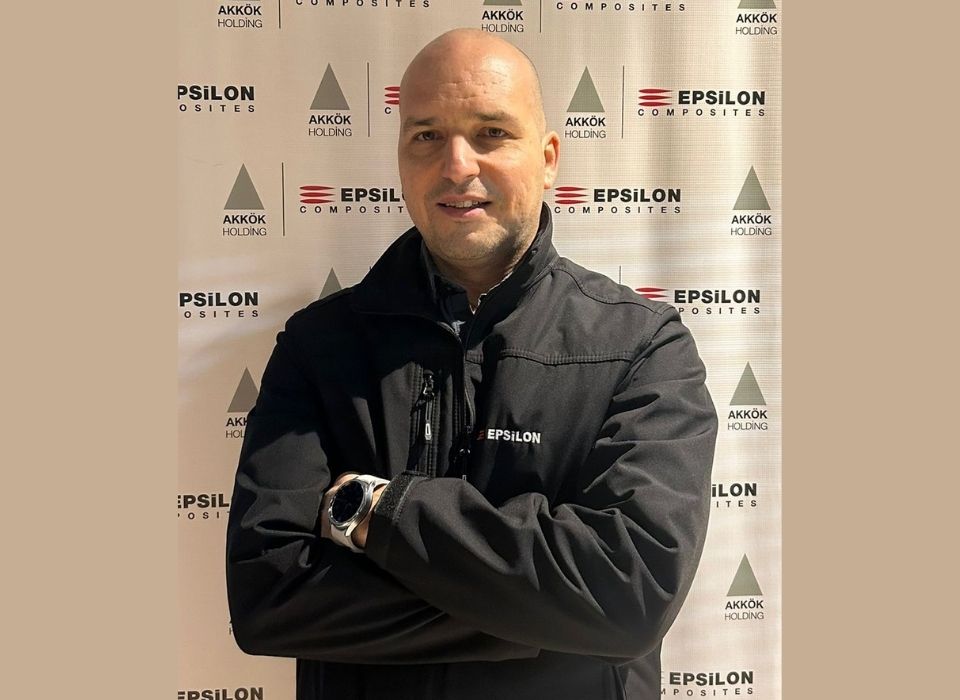
In an interview we conducted, Eray Akçakoca, Business Development and Program Management Director at Epsilon Kompozit, shared with our readers the company's sustainability vision as well as his views on the future of the composites industry.
Report: Murat Soygür
Epsilon Kompozit manufactures composite parts for various sectors, particularly defense and aerospace. In the interview we conducted, Eray Akçakoca, Director of Business Development and Program Management at Epsilon Kompozit, shared his views on the company's sustainability vision as well as his insights into the future of the composites sector.
Could you briefly tell us about yourself, your educational background and your professional experience in the sector?
I graduated from the Department of Aeronautical and Astronautical Engineering at Middle East Technical University (METU) in 2003. I began my professional career at Turkish Aerospace Industries Inc. (TUSAŞ) as a Manufacturing Engineer. I worked in this position for approximately 7 years and during this period I completed my master's degree in Engineering Management at METU's Department of Industrial Engineering.
Until 2022, I held various positions including Supply Chain Management and Business Development in the production of structural aerospace parts. I joined Epsilon Kompozit in 2022 and currently serve as Director of Business Development and Program Management.
Could you outline the development process of Epsilon Kompozit since its establishment? What are the core products and services your company offers?
Epsilon Kompozit was founded in 1999 and entered the defense and aerospace sector in 2011. Since its establishment, it has been engaged in the production of composite detail parts for the defense and aerospace sectors.
In 2021, Akkök Holding became the principal shareholder of Epsilon, and as of 2024, with various investments made, the company's vision has been defined as focusing on large-scale assemblies at component level consisting of composite-based materials. As of 2025, all shares of Epsilon have been incorporated into Akkök Holding.
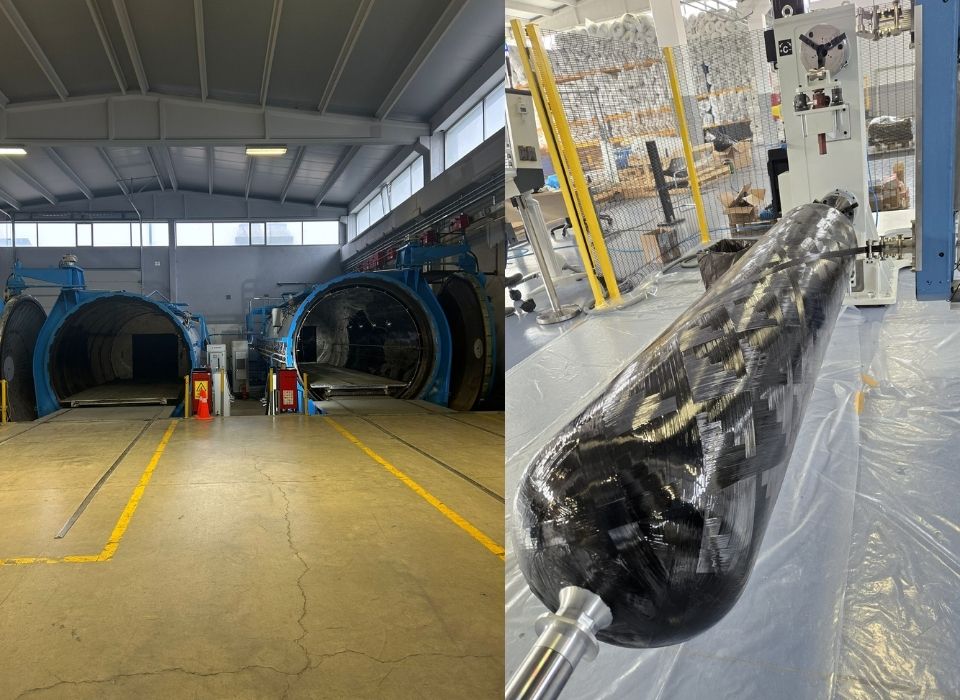
Our company manufactures various composite products in the defense and aerospace sector, including composite aircraft, helicopter and unmanned aerial vehicle parts, as well as radomes, wind turbine parts and hydrogen tanks.
Can you provide information about Epsilon Kompozit's sustainability vision?
To meet its energy needs from sustainable sources, Epsilon began electricity production with solar panels installed on its roof at the end of 2022. In line with environmental sensitivity and sustainability principles, it has moved into the production of hydrogen (H₂) storage tanks and is conducting R&D work in this field. Additionally, R&D projects are being planned for the advanced recycling of waste prepreg materials.
Could you discuss the latest trends and developments shaping the composites sector?
Today, the composites sector is developing rapidly to meet requirements for sustainability, lightness and high performance. Recyclable and environmentally friendly materials, bio-composites and low-emission production techniques are coming to the fore, while lightweight structures and fuel efficiency solutions in sectors such as automotive and aerospace are becoming increasingly widespread. In addition, production methods suitable for mass production and based on automation have gained importance in recent years.
What new technologies and areas do you plan to invest in going forward?
Our company has begun investments in basic-level machining, sheet metal forming and surface treatment for the production of metal materials used within composite-based components. These investments will enable complete vertical integration and products will be delivered to our customers assembled with the required metallic materials.
Additionally, we are conducting studies on out-of-autoclave composite production methods by closely monitoring composite technologies. This year we completed investments in "filament winding" and "rotomolding" and began hydrogen tank production. Besides this, we plan to carry out pilot production using SMC, BMC and ballistic materials with one composite press investment.
What are your forecasts for the future of the composites industry?
The future of the composites industry will continue to be shaped by focusing on sustainability, advanced manufacturing technologies and the development of innovative materials and production methods. With the proliferation of recyclable and bio-based composites, demand for environmentally friendly production processes will increase, and lighter, more durable and higher-performance solutions will be offered in the automotive, defense, aerospace and renewable energy sectors.
Out-of-autoclave and automated production processes will make the sector more efficient and cost-effective. In the future, it is expected that the applications of composite materials will expand and new application areas will be discovered.
Gallery